
1. Introduction
The increasing use of simulation games in education can be attributed to advancements in information technology. A review of the existing management simulators emphasizes the need for further development and exploration of applications in management science (OR/MS), while acknowledging the potential impact of education-focused publications.
This study presents the experience of applying a novel business game based upon the electronic spreadsheet allowing instructors to make a wide range of decision variables to study supply chain management from a perspective of economic, social, and environmental sustainability dimensions. The spreadsheet file of the game, together with a guide and other supplemental resources accompanying the paper, is available to download for free and unlimited use at https://sourceforge.net/projects/supply-chain-competition-game. For questions not covered in the article, readers are first encouraged to refer to the Intro guide and other accompanying resources (from the link above). For additional support, inquiries can be directed to the corresponding author via email: Ovezmyradov.B@tsi.lv / berdyovezmuradov@gmail.com.
The article contributes to management education by providing a free management simulator that offers parameter choice and financial reporting comparable to advanced commercial software. It also showcases effective classroom use of the spreadsheet-based simulation game, filling a gap in free simulation games with higher-level inputs and outputs. The game is grounded in the experiential learning theory and incorporates supply chain concepts related to marketing, financing, and competition settings. The game targets primarily university staff as end users and sets minimal requirements for staff, software, and equipment. Its use of an electronic spreadsheet format enhances accessibility and adaptability for a broader user base.
The game was tested in a variety of courses and institutions. The courses were in Logistics in International Business and Industrial Engineering. Students playing the game had diverse backgrounds, often including international and exchange students. Based on the authors’ experience, Table 1 presents the main features and suggests using the different versions in classrooms and online. The file of the most recent business game version, the Supply Chain Competition Game (hereinafter, the Game) is available as supplemental material for this publication, including the description and historical data.
The following sections describe the background of business games, teaching the Game as the main and the most advanced version used in actual classroom environments, user feedback, and conclusions.
2. Pedagogical goals and uses of business games
This section describes the widespread use of serious games and supply chain simulations for educational purposes. The introduction of simulations in higher education is guided in general by the experiential learning theory. This foundational theoretical framework of modern pedagogy considers learning as a cyclical process of knowledge created through the transformation of experience in a repeatable cycle of action and reflection: (i) hands-on experience; (ii) reflection on the experience; (iii) forming new ideas in abstract conceptualization; (iv) application of concepts to test in a new situation (Kolb & Kolb, 2017).
The use of simulation games in education indeed has experienced significant growth, driven by advancements in information and communication technology, offering numerous benefits to the academic and business sectors (Deshpande & Huang, 2011; Pasin & Giroux, 2011; Riedel & Hauge, 2011). Arguably, certain publications discussing education sometimes can have even more impact than a publication in OR/MS top-tier research journals in related fields, not only for the instructors but also for learners (Jeroen, 2021). Both within and beyond academia a multitude of techniques exist ranging from different simulations to serious play using LEGO (Ferreira et al., 2024).
Practical knowledge emphasizing the applicability of education and involving real-life problems during classes is among overarching educational goals in business schools (Tamássy et al., 2024). Games are increasingly used in training due to their engaging nature, which provides motivation and absorption in the learning experience (Borrajo et al., 2010; Westera, 2017). In business simulation games, the engagement can be particularly effective for teaching the art of business decision-making to university students and employees (Hoogeweegen et al., 2006; Kimbrough et al., 2002; Wu & Seidmann, 2018). The approach of using simulation and game might even enable secondary school teachers to introduce educational and career opportunities in management science for reaching their students (Gardner, 2013). Serious games are related to experiential learning, which can enhance student satisfaction and learning outcomes beyond traditional teaching methods (McGrath, 2023).
Computer-based serious games offer features such as visibility, reproducibility, safety, economy, and availability, making them a viable alternative for on-the-job training. These games assist operations managers in learning decision-making within a safe environment (Strozzi et al., 2007). They have been proven to be instrumental in simulating industry scenarios for developing business strategy models and facilitating executive debate (Ninios et al., 1995; Ponte et al., 2016). Systemic implementation of simulations and role-playing can deliver an engaging course and facilitate low-risk experiential learning in the modern digital business education (Alstete, 2023).
For users of a business simulation, model-reality fit positively affects satisfaction and reuse (Wei et al., 2022). Engaging students in a competitive real-time simulated business environment within an Enterprise Resource Planning (ERP) system, which integrates dynamic functional processes (such as planning, procurement, production, and sales) along with transaction information and business reports, can teach them to make tactical and strategic business decisions while improving knowledge of business processes (Cronan et al., 2011; Rienzo & Han, 2011). In addition, a review of simulation games reveals that most of those games belong to the experimental category; nevertheless, the number of serious games offering competitive settings has decreased over the past decades (Lewis & Maylor, 2007). Preparing university students to meet evolving employer demands should leverage interdisciplinary education (John et al., 2023).
An in-class simulation game provides a competitive and engaging approach, introducing students to fundamental logistics concepts like inventory management (Meyer & Bishop, 2016; Umble & Umble, 2013). The beer game, a classic system dynamics model introduced by MIT in the early 1960s, is a prominent example of modelling supply chains, manufacturing, and service quality. These simulations offer insights into the dynamics of the supply chain and demonstrate the bullwhip effect (Lee et al., 1997; Sterman, 1989). The majority of the existing versions of the beer game do not allow for incorporating a wide range of financial parameters even though they present an essential accounting basis of supply chain management (Laurier & Poels, 2013). The original beer game was a non-computer board game and required significant preparation before conducting the game in a classroom. Researchers tried to address the difficulty of setup and restrictions on applying the game through information technology, proposing modifications of the original game to facilitate its use for education (Anderson & Morrice, 2000; Cox & Walker, 2006; D’Amours et al., 2017; Day & Kumar, 2010; Daylamani-Zad et al., 2016; Drake & Mawhinney, 2007; Fetter & Shockley, 2014; Holweg & Bicheno, 2002; Jacobs, 2000; Sarkar & Kumar, 2016; Simchi-Levi et al., 1999; Sparling, 2002). Despite significant improvements with each subsequent version, the problem of access, configuration and implementation hindered practical applications of the beer game.
Although web-based games are common, they often have limitations in their design modifications and accessibility. Teaching projects using Microsoft Excel and designed for Project-Based Learning (PBL) can offer the advantage of easy setup, with the elimination of physical materials and associated costs, while presenting multiple teams with distinct problems – this encourages an adaptable variety of course delivery and minimizes opportunities for plagiarism (Miller et al., 2016). Electronic spreadsheet-based beer games have been developed to address these issues, offering flexibility and empowerment in using management simulators. These versions allow for easier progress tracking and facilitate ‘what-if’ analyses (Althuizen et al., 2012; Fetter & Shockley, 2014; Strakos, 2016). Evaluation of students’ performance in business simulation games can become complex with multiple criteria and, in such cases, scoring methods are commonly used to transform performance data into a common scale (Koltai & Tamas, 2022).
Teaching decision making in an online course became increasingly popular, especially during the pandemic, but learning can be challenging due to technical stress, unexpected inflexibility, an online learning disappointment, lack of guidance, and assignments perceived unreasonably difficult, or tasks as impossible (Mashaw, 2012). Furthermore, online simulations and games often require registration, authorization, and stable connection, while limiting the user power to adjust and change them according to own needs (MIT (2022) is a typical example).
Unlike online tools or executable files, the electronic spreadsheet format allows freedom to modify the structure of the simulator without programming experience. These and other advantages make spreadsheets among the best tools to learn management science (Albright & Winston, 2005). This is relevant not only for educational uses. Switching from ubiquitous spreadsheet software to specialized business software often presents an obstacle. Meanwhile, users of such tools often do not recognize their potential to improve business performance (Althuizen et al., 2012). Applying serious games in a modeling framework can help integrate supply chain, value chain, and business process models (Laurier & Poels, 2013).
Following the relevant approaches to studying analytical models of multi-echelon supply chains, the difficulty for students to learn the corresponding decision-making with long-term effects can be overcome as follows (Drake & Mawhinney, 2007).
-
Supply chain management functions, such as inventory control, must be experienced for deeper understanding.
-
Problem-based learning to increase post-course retention and enthusiasm of students.
-
The role-play of a planner in a section of the supply chain being responsible for periodic orders enhances appreciation of the complexity of managing the material flows and enables insights about interaction with the supply chain members.
-
Simulations create a competitive yet non-threatening setting for students to experiment and immediately view feedback.
-
Selected metrics of supply chain performance individual tasks show individual contributions and reveal the importance of collaboration and coordination.
-
The exercise design should increase self-synthesis in the cognition of the major concepts in courses.
Despite availability of reports and detailed reviews on serious games used for simulation in management, easily accessible and free tools with levels of decision-making similar to proprietary software are lacking. Recognizing the importance of accessibility in education, the Game was developed in spreadsheet format, offering free and unlimited modification.
The guiding principles of the Game are rooted in a theoretical framework supporting sustainable development in engineering and management education. The game aligns with the experiential learning cycle, mentioned in the beginning of this section, by means of the corresponding four stages that students complete: (i) decision-making for each period; (ii) analyzing the consequences of the decisions from numerical results of the simulation; (iii) linking results to theories of management science with assistance from instructors for new decisions; (iv) test the revised decisions. The Game then enables the following learning outcomes predicted for each of the repeating stages in the structured process of playing it: understanding of cause-and-effect, enhancing analytical thinking in self-reflection on choices, deepening conceptual knowledge of business models with the ability to synthesize data into a strategy, and developing problem-solving skills in adaption to changing conditions. The game thus contributes to the instructional design field by facilitation of an experiential learning cycle, so that a simulation does not require costly software or setup to achieve the benefits of learning from doing. The problem-based learning and simulation practices (that the Game is based upon) thus achieve the goals of enhancing cognitive benefits in the allotted time.
3. Overview and classroom implementation
Since the classic beer game, the simplest version, was already described by Ovezmyradov, Meuthia and Kurata (2016), this section focuses on the main version - Supply Chain Competition Game. This most recent version took the greatest effort in the development, leading to potentially the most powerful management simulator still available for free unlimited use (as the file accompanying this paper). The one-player version is briefly discussed at the end of this section as the main features are the same the main version.
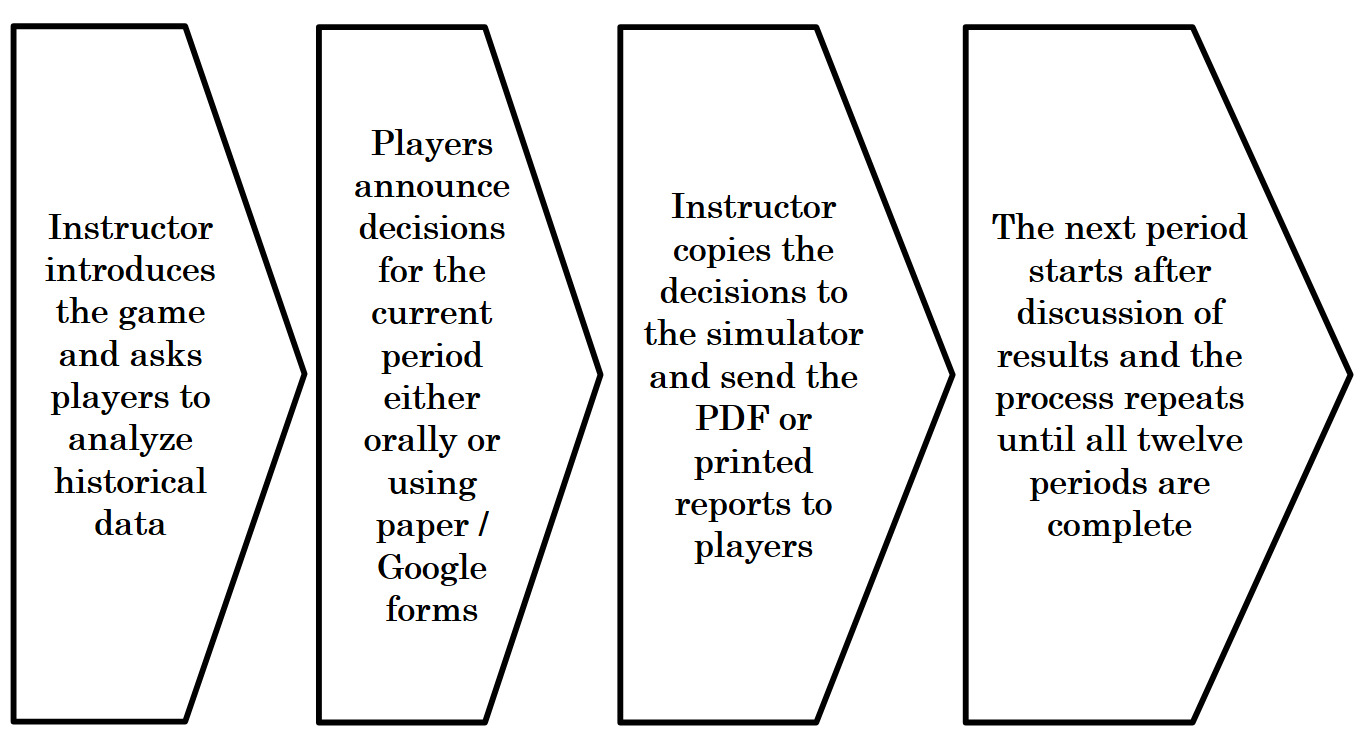
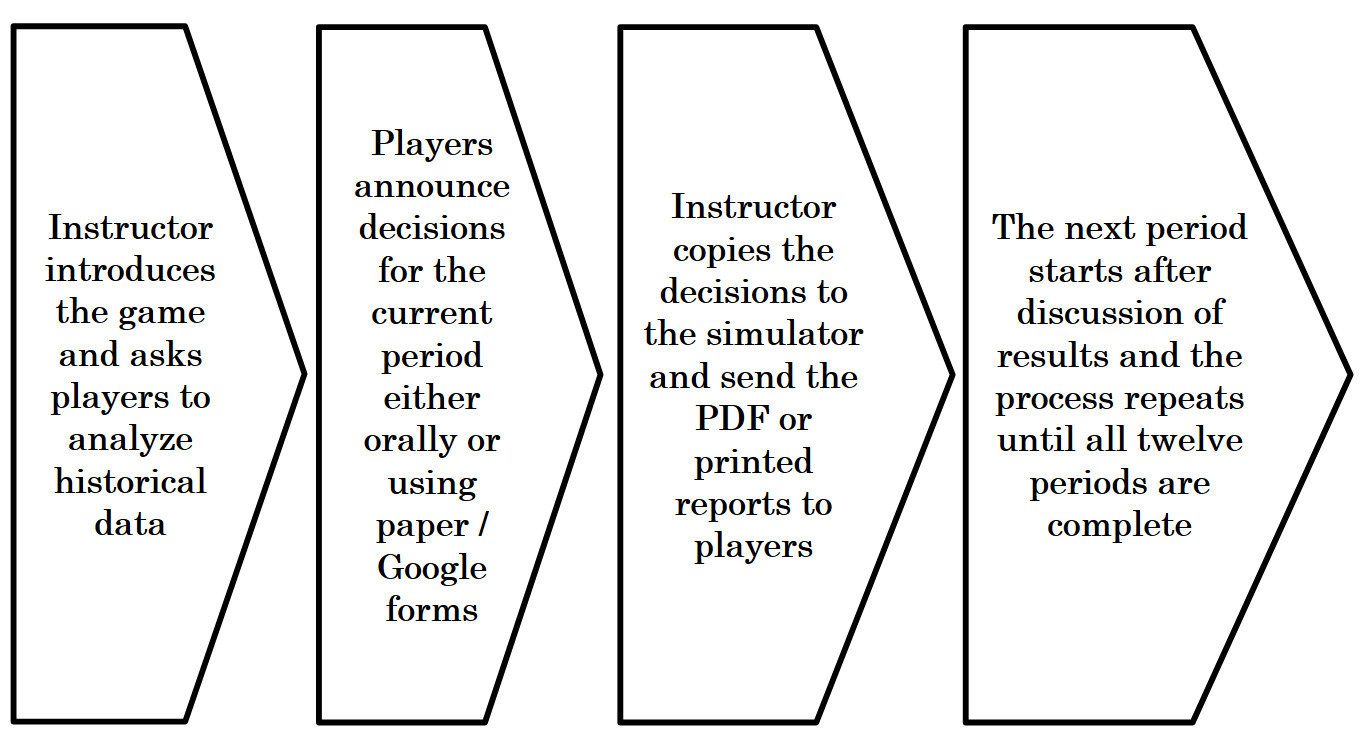
Figure 1 shows the systematic guide to conducting the Game and the sequence of the instructor’s activities. Obviously, a computer (desirably with installed spreadsheet software, an internet connection, and a projector) is the only piece of equipment required to conduct the game in a typical classroom. The Dashboard sheet opened first in the spreadsheet file of Game conveniently provides links to each player’s decision forms and reports.
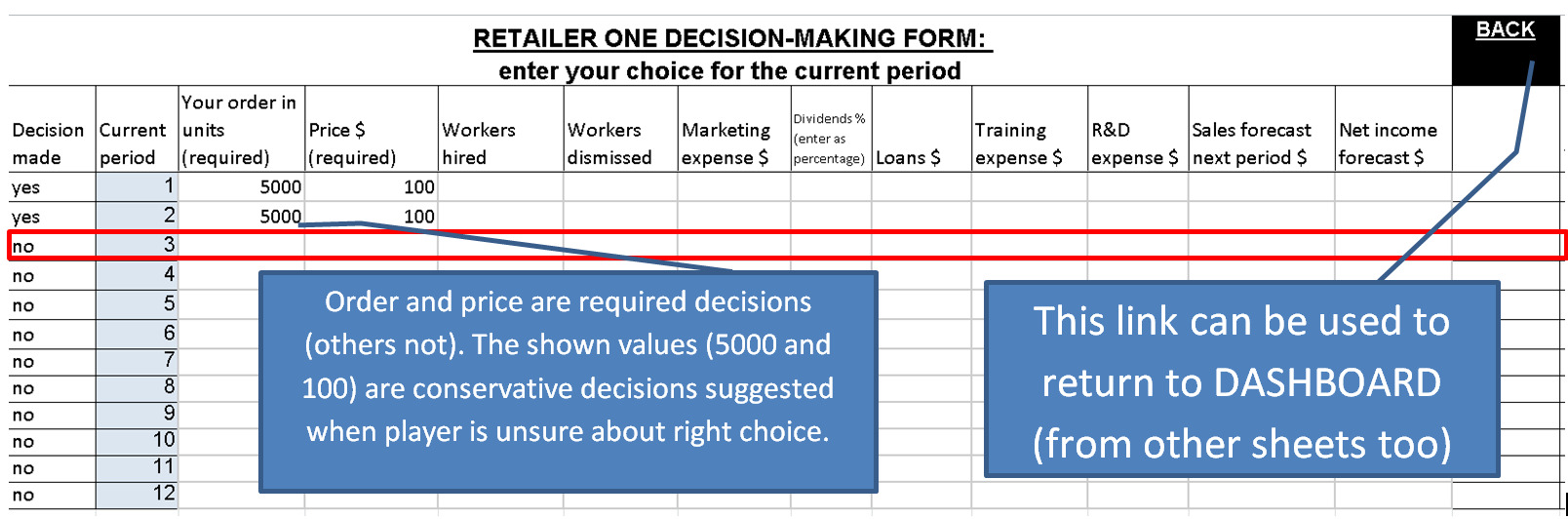
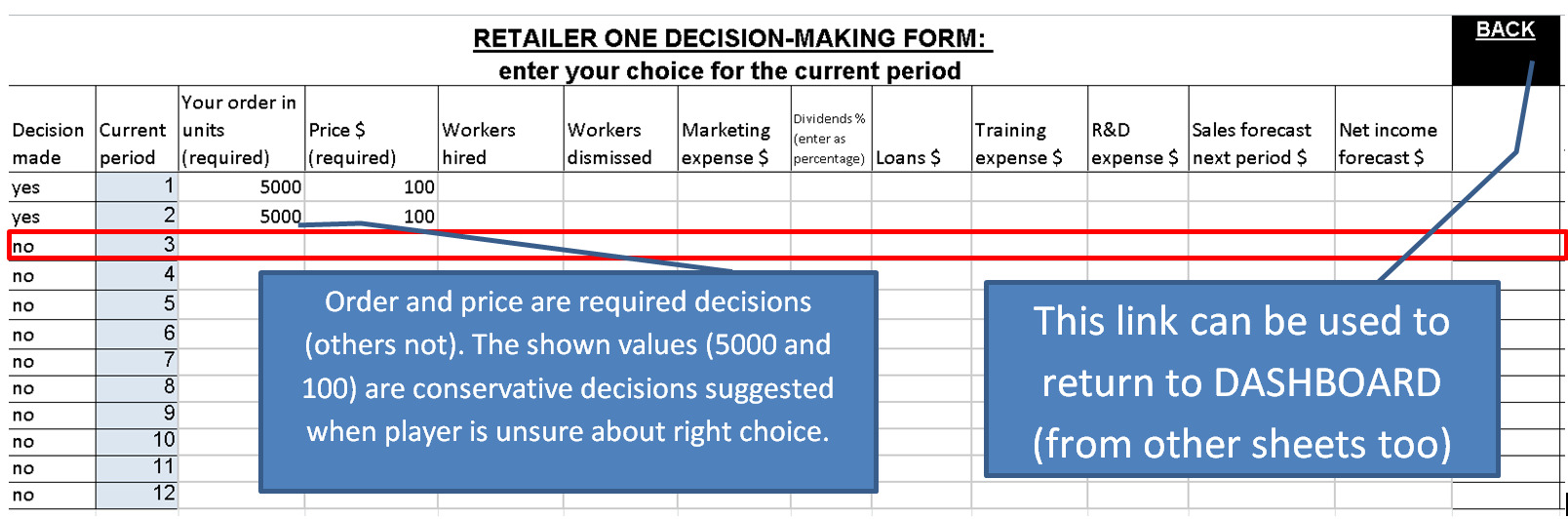
The game starts with the instructor telling players to read the Introduction file to the retailing company and its supply chain (if schedule allows, before the day the actual game starts). An appendix of the teaching note (guide) accompanying this article shows the Introduction (for Retailer One, but Retailer Two and its supply chain have the same parameters), from which players should understand the main assumptions and parameters of the supply chain, including: (i) Backorders are allowed at a shortage cost. (ii) There is a holding (carrying) cost for each unit of inventory and also an order setup cost for each order. (iii) There are fixed costs per period, sales prices and purchasing costs for each player. (iv) Lead time is two periods, and in total, there are 12 monthly periods per game (together representing one year of the retailer’s operation). During the introduction, the instructor should show the players the decision form (Figure 2) and ask them to think about how real businesses can decide what values to select.
After the Introduction, players should be told to additionally analyse the Historical Data - a file presenting (fictional) results of the same retailer’s operations for the previous year. The instructor should briefly describe the leading indicators (see Table 2) and, in order to ease excessive concerns about the game’s difficulty, tell players there is no need to thoroughly understand the meaning of all outputs at this moment, as will learn during the game. However, the instructor should encourage players to try guessing how the historical data can be used to make decisions (Figure 2) in future periods. The r0 tab sheet in the game spreadsheet shows the historical data report, which can also be accessed via SAMPLE REPORT (PAST PERIODS) link on the Dashboard. Notably, the monthly information generated for each player after a game period is played follows the same report format.
Meanwhile, the instructor should prepare for the following steps of actually playing the game:
-
Create a copy of the Game spreadsheet for each pair of competing players (teams or individual students) in the class (for instance, five copies are to be created if ten students are in the classroom if each will manage a supply chain). Assign them to each player/team using the numbering R1, R2, W1, W2, and so forth (in the case of a large group, two or more players can make decisions in a team for one stage of supply chain). With an odd number of players, the instructor could play against the players for one pair. It was found empirically during the previous games that the game was getting slow and stressful to manage once the number of retailers exceeded eight (four spreadsheets). Hence, assigning teams instead of individual players was advisable in such cases of the larger classes. Players should be reminded about the winning criteria (balanced performance in the leading indicators) and that they compete only against another retailer (in the same spreadsheet), not all other retailers.
-
Announce the start of the first period (January) and set submission time for decisions, usually longer at the beginning of the game and shorter at the end. Depending on the schedule of the corresponding course, the time to make decisions could range from ten minutes (for intensive courses or training) to one week (for full-semester classes). If some students are still not sure about what decisions to enter initially (which often happens in practice), suggest using conservative values for order quantity (for retailer, 5000 units as in the previous year) and price ($100, the previously suggested retail value) while telling the other decisions are not required for now, so they can be left blank (nil). Of course, the players should learn to make independent decisions based on analyses of reports as they progress in the game.
-
Collect decisions from students for each retailer for the first period to be entered in a/b/c/d/e/f/g/h sheets (for instance, ask players to orally announce their input values to manually enter or use paper questionnaire offline or Google Forms online). Once all decisions are entered, print or save as PDF the results in 1r-2h sheets for distribution to students once the sheets are properly formatted (to show only data for played periods by hiding the cells showing values for the future periods – spreadsheet formatting tools such as cell shading with fill colors can be used to this end). Alternatively, copying only current and past results to a Word file is a convenient option to show only the present and past periods, though it can be time-consuming.
-
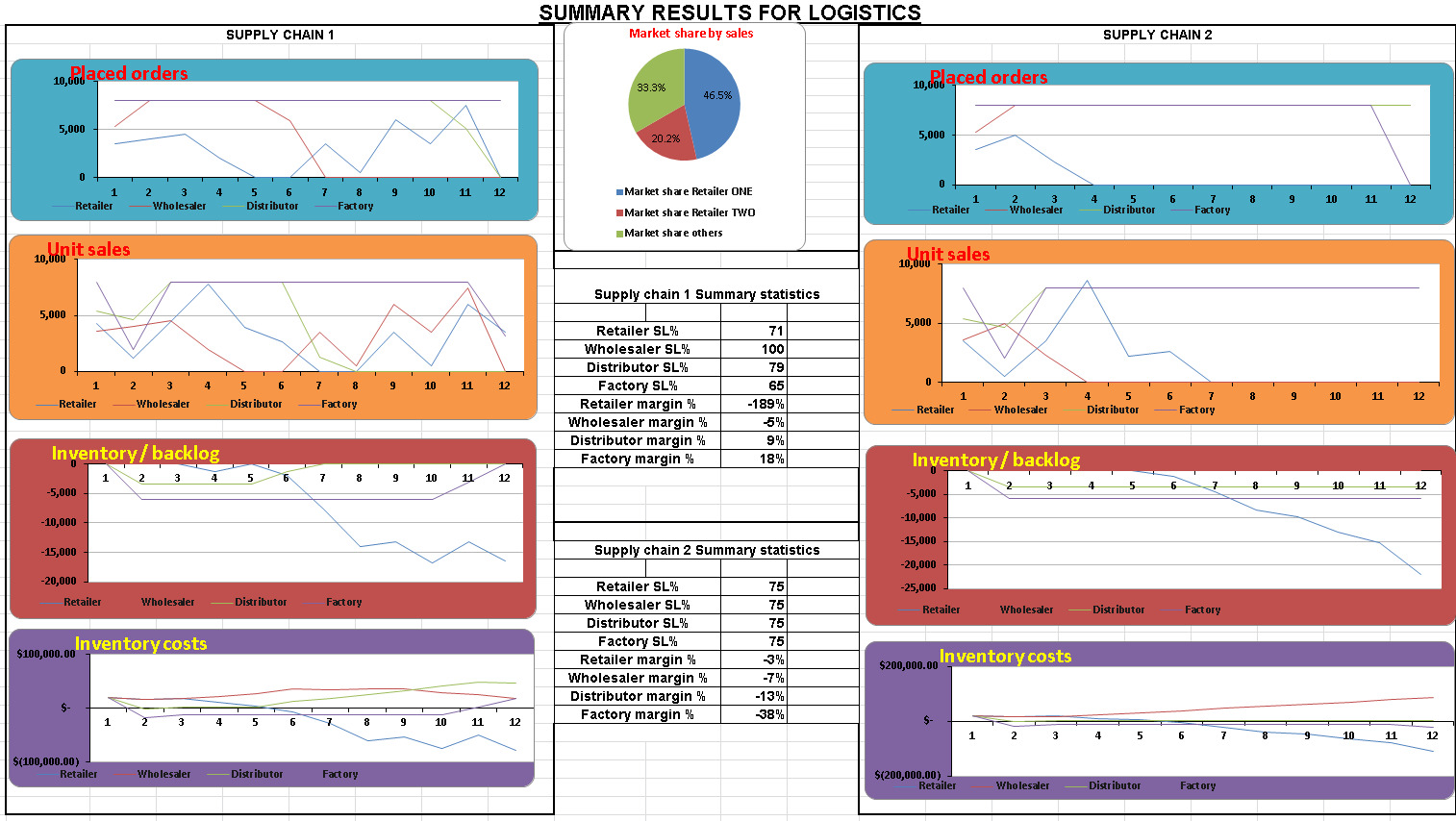
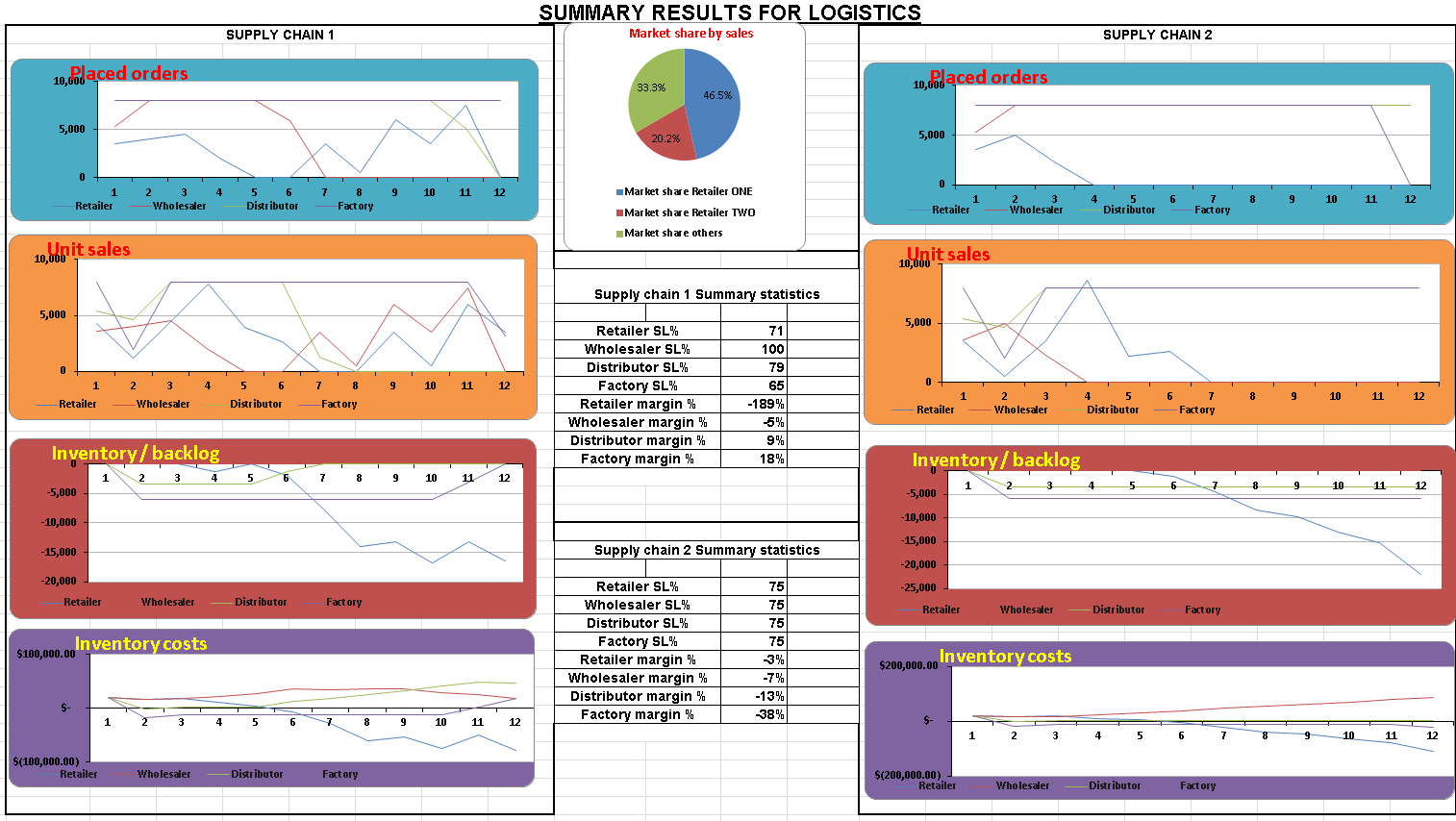
Repeat the same actions as above for each new period until all twelve (or shorter target set by the instructor) periods are finished, discussing results between each session. Instructors should discuss students’ common mistakes (erroneous decisions) and correct them as needed. The instructor can summarize the main results via the graphs related to finance on the DASHBOARD and related to logistics on the SUMMARY (Figure 3) sheets through a (projector) screen between each period. Of course, players’ focus before playing each new period should be on analyzing the latest updated report to make data-driven decisions, and the instructor should periodically remind students about it.
As for the final part of the Game, this note does not advocate for a specific action when the last period (December) is over. Choosing the final report or presentation format is up to the instructor’s preferences. The full output of the game in spreadsheet files (only values, not formulas) should be provided to all players in the end anyway so they can analyze and create visualizations (similar to the ones in the DASHBOARD together with the SUMMARY sheets) for their final class presentations once the last period is over. Students could be given more advanced tasks in their final presentation as per their study background, such as regression. In the past experience of conducting the Game in a larger classroom with the high participant numbers divided into teams, requiring forum posts on the learning management system of a university (Moodle and similar platforms that allow graded forum posts) can be more effective for learning than a final presentation assignment: the instructor asks players to select one category (shown by Table 2) in their teams and post a brief comment on the course forum describing the main results and their connections to the decision after each period; the categories assigned to a player should be different for each new period so that each student would post several posts covering all the categories by the end of the game. The graded posts instead of PowerPoint presentations or final report submissions appeared to strongly incentivize students doing own research for a deeper understanding real business meaning of the keywords – indicators outlined in the table below.
Table 2 outlines the main elements of the reports updated for viewing by players in each period. The instructor should instruct players to pay attention to the leading indicators before making decisions for the next period.
The numerous initial parameters of the game can be adjusted via: (i) direct value inputs on sheets “1”, “2”, “Demand”; (ii) changing coefficients in the cell formulas on sheets “R1” and “R2”. The “Demand” sheet is particularly to change inventory model scenarios for learning: from deterministic to stochastic to trend in final customer demand. These and other sheets in the Game (the majority of them not linked to the Dashboard) should be modified with caution only after analysing the spreadsheet structure and formulas. For beginner instructors, it is safer to use the default settings.
The one-player version is different from the others in that a player or a team effectively plays against a virtual competitor whose decisions are entered in advance. Such option substantially simplifies and speeds up the process of conducting the game. It is particularly suitable for playing as homework or in situations when results have to be shared rapidly but time and other resources are limited. A disadvantage here is losing the multiplayer dynamics of competing against other human players, which could make a game less of engaging learning experience. An added advantage, on the other hand, is the opportunity for a student to experiment with the simulation at own pace, trying different scenarios. Instructors then can collect files of played games to identify winners and shows the best practices.
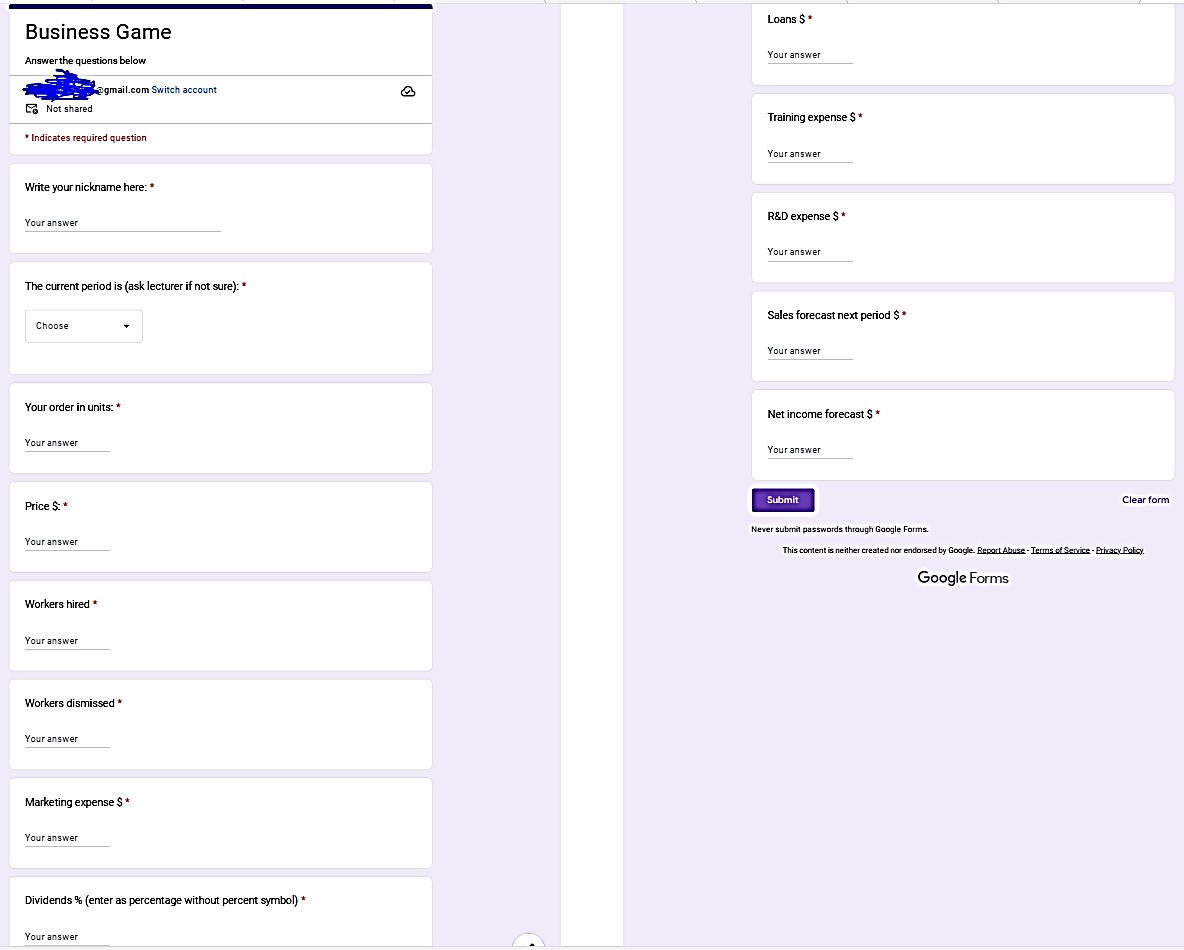
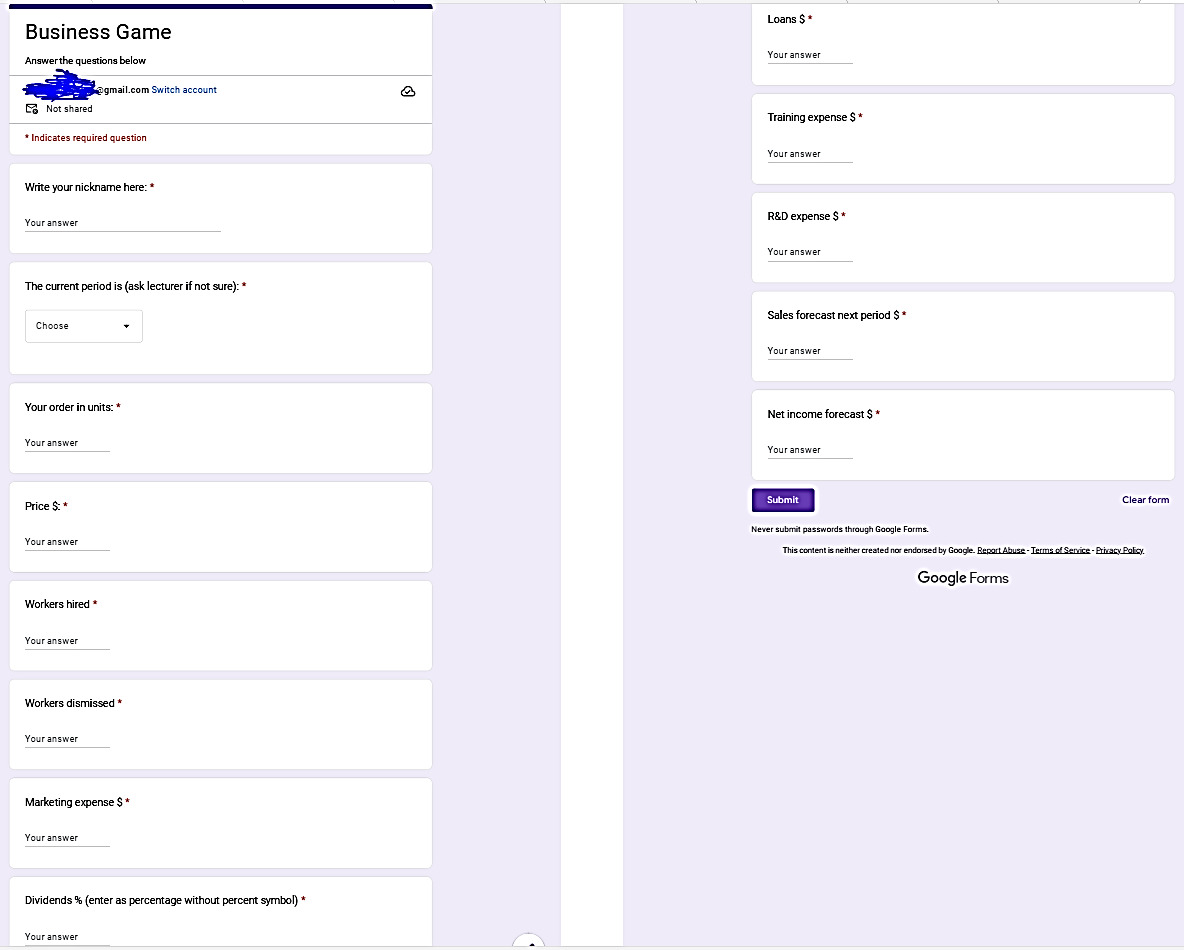
During the shift to online learning after the pandemic outbreak, Google Forms were used to collect students’ decisions to be copied by an instructor to the designated entry sheet (Figure 4). Furthermore, the online mode of the Game can technically be made available using a variety of network-based methods: over a shared spreadsheet on LAN or Google Sheets on the internet. As the past uses covered pre-pandemic face-to-face instruction and subsequent alternating shifts to online mode due to coronavirus-related disruption in 2020, the three subsequent versions of the business game were tested for use in a range of learning scenarios. Unfortunately, experiments with network-based (Shared Workbook via LAN) or cloud-based spreadsheets (Google Forms and Sheets combined on Drive) allowing each player to independently enter decisions in the Game proved to be cumbersome. The experience demonstrated that using the game in an online setting is possible, albeit it substantially hampers the speed and timely discussion of results.
As practical guidance, the authors would like to share the following actionable tips for instructors, which proved to enhance engagement in their past classes related to supply chain management (their performance in alternative environments might be different though). A first round of the Game usually started with decision-making mostly based on personal judgement (rule of thumb, opinion, “gut feeling”, and intuition) after initial acquaintance with the introduction – knowing the previous and starting parameters but without advanced analytics. Next, instructors would select several illustrative results of students to question which decisions could lead to the observed results. In practice, negative results were the most interesting, and failure to make a right decision or leave some decision without entry (blank) could be identified in a discussion together with students. In a second round, students were given more time to use established models such EOQ and newsvendor (for safety stock). Additionally, a forecast based on moving averages or regression analysis was encouraged to support decisions. These models are included in the Guide for the Game. The pacing would be determined by duration of a course, but each rounds being conducted in a separate day gave better results so that students could have enough time to reflect. The group setup was based on a class size, with smaller sizes (when feasible) allowing more active participation by each student. The scoring commonly chosen to select and reward the top three winning teams (or individual students in the one-player version) was based on sales revenue and net income being equally important (50/50 split), and some players might get an honorouble mention by being leaders in alternative metrics such as stock price. Instructors would start all games with an announcement that students would not be punished for negative results or risky decisions in order to encourage experimenting. The highest achievers always received bonus points in their grade, but they were reasonably small.so as to avoid any discouragement for others. Some of the common pitfalls observed at the beginning involved an introduction and initial instructions being done by instructors in a hurry – this would inevitably lead to more instances of confusion or misunderstanding later in a game. Sufficient time for preparing a class and regular reminders (repetitions) of the key points and making sure each student understands what to do in the current moment helped avoid related issues.
The Game, with its spreadsheet format, allows for exploring a wide range of learning possibilities which were not sufficiently tested yet. As one classroom scenario, few games were conducted to understand the concept of demand and other signals: first, a limited information mode (the default setting where the instructor on a single computer strictly controls the disclosure of results) followed by the full information sharing in the game where all players can observe actions and results of others (online possibly). The other potential scenarios cannot be covered here due to the time and space limitations. They are to become the direction of the future work.
4. Feedback and comparisons
Table 1 above indicated differences in possible scenarios of using each of the three game versions. They were tested in classrooms, and this section summarizes the experience.
The development of the early version of the Game dates back to 2016, when one of the authors became a Teaching Assistant at a Japanese university. The first version (which can be characterized as the Classic Beer Game version) was first presented without substantial empirical support by Ovezmyradov, Meuthia and Kurata (2016). Since being uploaded to the Source Forge website, this first version of the Game has been in demand among users worldwide, with the number of downloads exceeding one thousand across dozens of countries (the original Classic Beer Game version is still available online at https://sourceforge.net/projects/scmcompetition/). This result encouraged further development of the Game for academic courses in Latvia and Turkey, eventually leading to two extra versions: the One-player and the Game versions*.* The classic beer game allowed players to control all the supply chain partners (retailer, wholesaler, distributor, and factory) while making only one type of decision (order quantity) for each period. The Game extended the range of decisions: eleven instead of only one. However, the one-player and beer game versions only had retailers as human players (decisions for other partners in the supply chain are made automatically).
As the one-player version represents a slight modification of the main Supply Chain Competition Game version this report primarily outlines the Game’s unique features and actual uses (unless stated otherwise). This version was used in larger courses in intensive format where little time remained during and between lessons to run the main version. In one course, the one-player version was distributed as homework. The version suited those situations well, enhancing the flexibility of game. Experimenting with enough time revealed to the students a special value of business simulations in exploring various scenarios and finding extra insights, as their results demonstrated in required reports to be written by each player upon completion of individual games. Regardless of the version, the game was designed to suit various levels of academic and job backgrounds of players.
As for the actual academic environment, the first test of the beer game (the predecessor of the Game) took place within a supply chain management laboratory among industrial engineering students at a Japanese university. As per the feedback of a professor who observed the Game, it could be helpful not only for serious games but also for learning and even using Decision Support Systems after modification. The following is a quote from the input of one of the students who had an experience playing a conventional board version of the beer distribution game previously: “This game is much easier to conduct than the board version. During my undergraduate studies, I observed a very long time and effort to set up a paper-based game for instructors before a lesson could start with the beer game. Besides, we could not see results immediately; they were made available after a considerable delay when students’ interest declined. This new game was great in that we could observe the results of our actions immediately. Overall, the flow of this new game was interesting to play by myself and watch how other players were doing.” Thus, it became evident from the start that the Game could continue to serve as a convenient tool in widespread spreadsheet environments for both educational and business simulation applications.
The interviewed students in the other institutions later noted the Game was fun to play and see results with graphs. Students appeared curious, seeing the outcomes of their decisions after each game round. One feedback noted that playing the game was not too demanding in terms of the required time. As for shortcomings, the initial difficulty of understanding how to choose values in the decisions was widely reported to cause some degree of confusion at the beginning. This negative outcome could be explained by the limited time available to explain the background and examples of decision-making. Notably, the initial deployment and feedback allowed the elimination of numerous errors present during the development of the Game. The initial hesitation and confusion quickly vanished after playing four or five periods, and the game ended with most players enthusiastic about scoring higher.
After the first testing phase, the game was actively used for in-class and homework assignments during four courses mostly related to logistics: Industrial Engineering, Logistics in International Business, Sustainable Supply Chain Management, and Fundamentals of Logistics. Graduate and undergraduate classes were sufficiently diverse in participant backgrounds and size of up to 40 participants – this is significant as learning management and entrepreneurship through gamification can be appropriate in large classes (Memar et al., 2021). Additionally, a simplified one-player simulation of competition between two retailers and their supply chains was made available for certain courses.
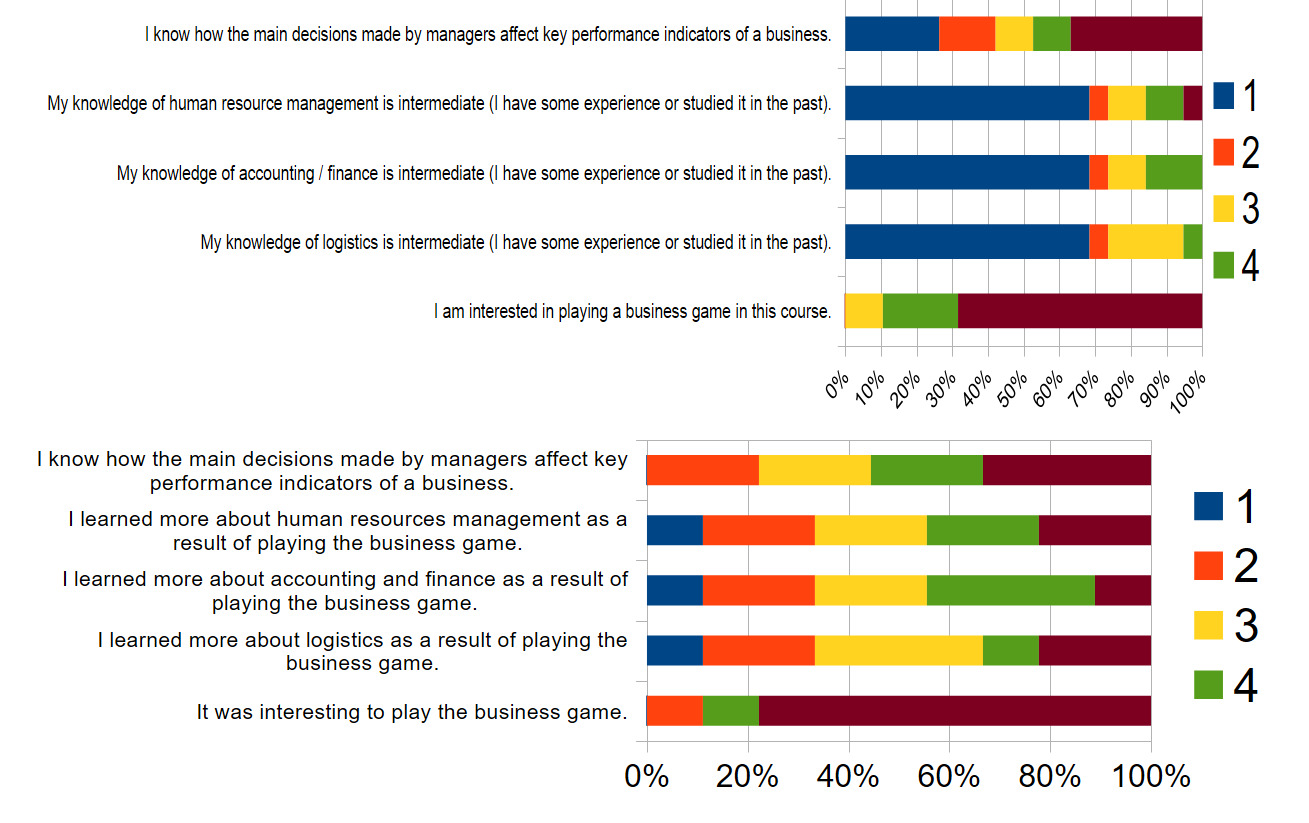
Since requiring all students to complete questionnaires was problematic due to regulations, feedback on the game was collected through anonymous surveys and interviews with a limited number of selected students and staff. All respondents were encouraged to share their opinions on the negative aspects of the game. The participants’ response at two different universities was overall positive, as in the other institutions where the game had been tested (Figure 5). The majority of the respondents noticed how learning improved in the following fields (averages on 5-point scale): logistics 3.11, and finance 3.11, human resources 3.22. This is despite their intermediate knowledge in those fields reported to be on average 1.63, 1.74, and 1.79 respectively. Furthermore, respondents felt they better knew how the main decisions made by managers affected key performance indicators of a business: 3.67 on average compared to 3.15 before the game session. And the average of 4.56 was answered to the question whether it was interesting to play the business game.
_and_after_.png)
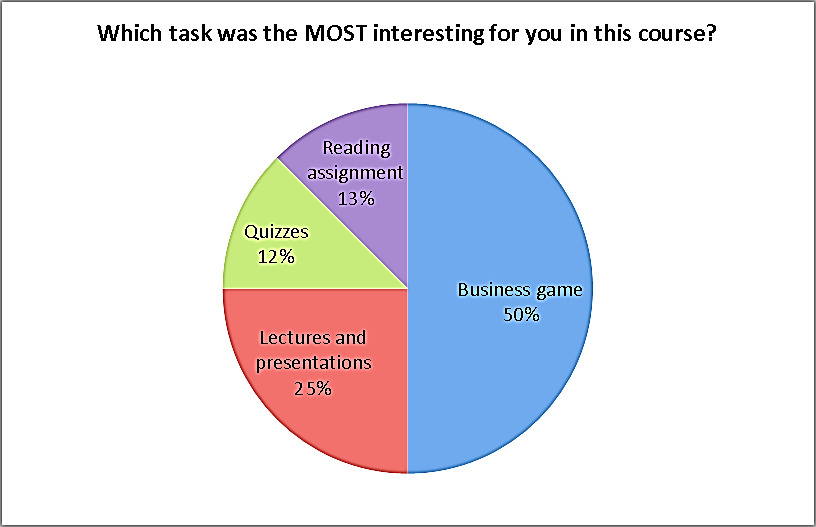
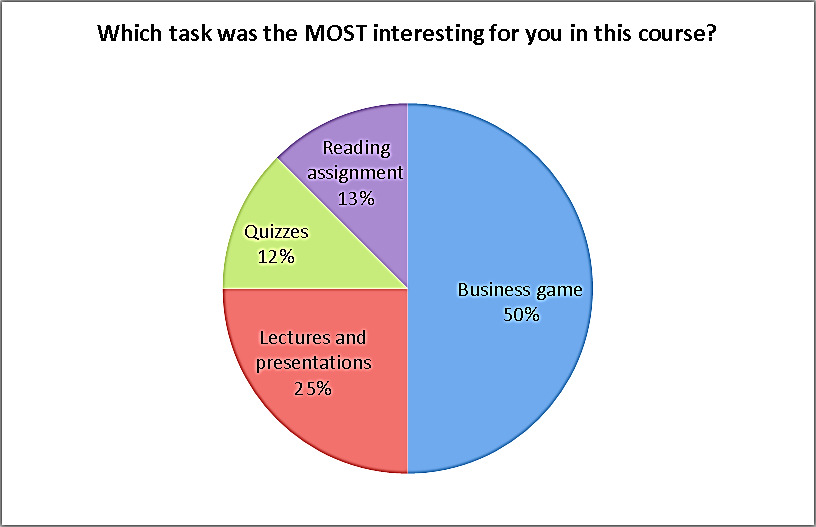
Figure 6 illustrates how the substantial number (half) of students found the game to be the most interesting among all the given tasks in assessment according to another feedback from a separate survey upon completion of the courses.
Overall, the final impression after observing students play was that the game made lessons more interesting and useful for learning, while it prevented students from getting bored. It also helped introduce complex connections between operations, sales, and finances of modern businesses functioning within a market economy in an entertaining, accessible manner.
Unfortunately, the cost and access to purchasing commercial products severely constraints globally exploiting serious games’ true potential. Table 3 show comparisons of several platforms available for educators. The only free option found can only be played online. A paper Beer Game by Harvard Business Review Store is affordable but not electronic. Costs for other paid alternatives can easily range from one hundred to thousands of US Dollars depending on a class size (TOPSIM and CESIM do not publicly list prices but, judging from their features, they are not likely to be cheaper than for other commercial products). For instructors without appropriate funds or sponsorship (especially at universities in developing countries) the cost can be prohibitive.
Table 4 presents the features of business games that are not commonly offered by the simpler games (such as beer distribution) but supported, at least partially, in the compared simulators of management. Though not a perfect match to the leading commercial products, the Game appears closer to them than other free alternatives.
Finally, the authors used TOPSIM for benchmarking the features since one of them had experience participating in this commercial management simulator during his graduate studies, while detailed comparisons with all the alternatives here would be beyond the time and space constraints. The comparison was relevant since the TOPSIM general management game simulates typical processes within an enterprise (procurement, controlling, production, marketing, and R&D) to learn the interrelation within a company, the conflict of objectives, and decision making (Riedel & Hauge, 2011). As such, TOPSIM alternative is perhaps the best available example of proprietary software to compare with the Game within the same category of serious games, offering a higher level of learning objectives than a classic beer game (with its primary goal of only introducing system thinking and the bullwhip effect). Admittedly, TOPSIM offered a better GUI and reporting with an extended range of simulation scenarios allowing a greater choice of variables. TOPSIM is an established product in university and executive education with well-documented materials.
The greatest constraints of the game relative to the commercial platforms perhaps could be the lack of technical support and maintenance. Though technical and conceptual errors might remain in the proposed Game version, they are believed to be rather minor bugs and repairable in the spreadsheet design by users themselves. Acknowledging the weaknesses of the Game, it is still argued that the simulator, with the advanced list of features necessary to understand the peculiarities of sustainable business development, can be valuable as a completely free yet powerful enough alternative to the leading proprietary software in the growing industry of management simulation.
5. Conclusions
To improve the competitiveness of free management simulation games against commercial products, we have developed a spreadsheet-based simulator as a contribution to open educational resources. This simulator models a modified beer game with a focus on broader dimensions related to sustainable business development. The game’s features aim to advance games in the operational research/management science and enhance practical applications in classrooms and industry. The game features multiplayer functionality using conditional formatting in spreadsheets. This teaching brief also describes an extensive experience of using the game across several courses in several universities. The experience demonstrated that a simulation of competition between two retailers and their supply chains in a spreadsheet can achieve the main educational benefits of serious games, while offering an easy setup, an intuitive interface, and the option to play locally or online. Overall, the instructors’ impression after analysing survey responses and observing students playing several games was that they made lessons related to supply chain management engaging in the otherwise hard-to-understand (for most students) course content.
Acknowledgment
The corresponding author received support from MOCCA HORIZON-MSCA-2021-SE-01-01 Staff Exchanges 2021 programme (project number 101085855).