
In marketing education, a recurring challenge is engaging students who take the course only because it is compulsory, often without perceiving marketing as relevant to their academic path. Students oriented toward finance or data-driven fields frequently view marketing as less rigorous or even “easy” (Aggarwal et al., 2007; Lamont & Friedman, 1997; Taylor et al., 2011), which can reduce motivation and foster disengagement.
When students participate only to meet minimum requirements, they miss out on the deeper learning outcomes that come from active engagement (Álvarez-Huerta et al., 2021). Skills such as creativity, communication, and cross-functional thinking, which are crucial for marketing practice, are difficult to develop through passive learning (Celuch & Slama, 2000). Limited voluntary participation can also reinforce negative stereotypes about the discipline, making it harder for marketing courses to attract and sustain motivated students (Lamont & Friedman, 1997). To address this pattern of disengagement, marketing educators have increasingly adopted active learning strategies that depend on student participation to develop skills such as collaboration, critical thinking, and communication (Celuch & Slama, 2000; Peterson, 2001).
The diffusion of generative Artificial Intelligence (AI) adds complexity to marketing education. AI tools may lower procedural barriers to participation, yet without intentional pedagogical design, they risk reducing cognitive effort and encouraging superficial engagement (Mehmet et al., 2025; Richter et al., 2024). These developments reinforce the importance of understanding the psychological conditions that sustain meaningful engagement.
Although participation is widely promoted as a cornerstone of active learning in marketing education, it is not always clearly defined or systematically examined. Research and practice frequently conflate minimal compliance with genuine contribution, treating behaviors such as attending class, completing assignments, or actively contributing to discussions as equivalent forms of participation. This lack of conceptual clarity not only limits research precision but also leaves instructors uncertain about whether students are genuinely engaged or merely complying with minimum requirements. In this study, we focus on voluntary participation, defined as intentional contributions that exceed course minimum requirements and demonstrate students’ engagement with learning. Understanding what drives students to participate voluntarily may help marketing instructors design learning environments that better support motivation and learning outcomes.
Prior studies consistently confirm the value of experiential approaches in marketing education. Bacon and Stewart (2021) show that active methods outperform traditional formats, while Garver et al. (2025) highlight competitions, projects, and flipped classrooms as particularly engaging for Generation Z. Complementing this evidence, McGrath (2023) demonstrates that service-learning projects in a marketing capstone course enhance satisfaction by fostering both personal skills and social responsibility, reinforcing the broader benefits of experiential pedagogy. While these studies demonstrate that experiential methods support learning in marketing courses, less is known about why they enhance learning processes. To address this gap, we ask: How do empowerment and engagement interact to foster voluntary participation in marketing courses, and how are they shaped by contextual conditions?
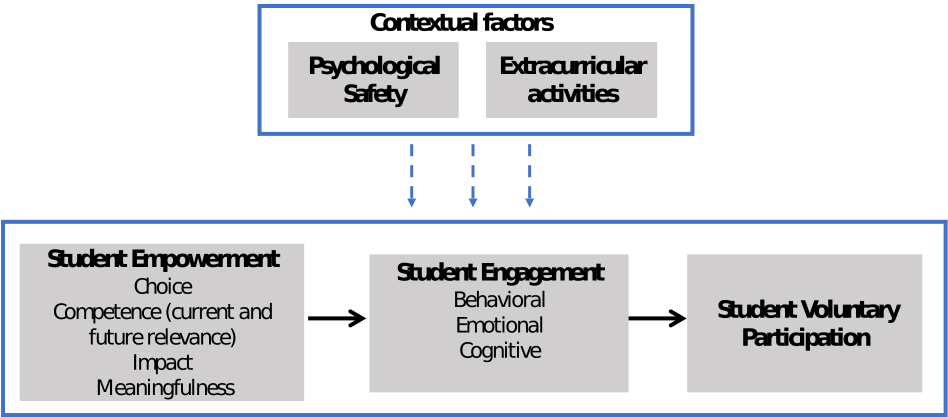
Our study advances this discussion by examining the psychological mechanisms underlying active learning methods results. We employed a mixed-methods approach, combining survey data, student and instructor interviews, and classroom observations. Specifically, we demonstrate how empowerment - capturing autonomy, competence, meaning, and impact (Thomas & Velthouse, 1990), interacts with engagement - a behavioral, emotional, and cognitive state (Brodie et al., 2011), to clarify the process through which active approaches foster voluntary participation. This shows that well-designed activities alone are not enough; students must also experience psychological conditions that activate their willingness to engage, an idea consistent with broader calls in the literature to recognize the role of psychological and contextual factors in shaping participation (e.g., Kahu, 2013). In addition to validating a mediational model in which engagement links empowerment to voluntary participation, we also identified two contextual factors, psychological safety and extracurricular experiences that appear to spill over into classroom motivation, based on insights from interviews and classroom observations.
This study shows that voluntary participation in marketing courses arises not only from instructional methods, such as experiential projects, simulations, and opportunities for autonomy, but also from the broader ecosystem of relationships and experiences. Supportive classroom climate, trust-based interactions, and extracurricular involvement in student organizations or competitions shape students’ willingness to contribute. By integrating these psychological and contextual drivers, the study offers marketing educators a framework to design learning environments that cultivate empowerment, sustain engagement, and translate into voluntary participation.
Literature Review
In this section, we conceptualize student participation, empowerment, and engagement. We identify boundaries between these concepts to build construct validity (Kahu, 2013) and explore their relationships.
Student Participation
Participation in service delivery occurs at various levels (Bitner et al., 1997). In education, students play a crucial role in the learning process, and participation ranges from mandatory behaviors such as attendance or minimum-effort task completion to voluntary contributions that enrich learning (Dong & Sivakumar, 2017). Voluntary actions, such as asking questions or sharing viewpoints, enhance learning by fostering active involvement (Peterson, 2001). Despite its significance, many studies conflate mandatory and voluntary behaviors or fail to define participation clearly, contributing to inconsistent results (Chan et al., 2010; Weaver & Qi, 2005). As Fritschner (2000) argues, advancing research requires clearer conceptual boundaries.
We adopt Dong and Sivakumar’s (2017) marketing-based typology. Voluntary participation refers to student-initiated contributions that are not essential but enhance the learning experience, particularly in marketing courses that emphasize collaboration and applied learning, where peer interaction, project work, and discussion often go beyond minimum requirements.
Student Empowerment
Conger and Kanungo (1988) introduced empowerment as a motivational construct that enables individuals to act, while Thomas and Velthouse (1990) advanced it as increased intrinsic motivation. Spreitzer (1995) provided empirical support for empowerment as a second-order construct composed of four dimensions: meaningfulness (value of the task), competence (confidence in one’s ability), choice (autonomy in decision-making), and impact (influence over outcomes).
In line with Spreitzer’s (1995) conceptualization, we consider empowerment a four-dimensional construct, each dimension reflecting a facet of psychological empowerment within a unified latent structure.
Student Engagement
Engagement has been defined as behavior (e.g., word-of-mouth or participation; Jarvis et al., 2014; Van Doorn et al., 2010), as a process of increasing involvement (Bowden, 2009), or as a psychological state during interaction with a focal object (Brodie et al., 2011). We adopt the latter perspective, viewing engagement as a latent willingness to act, distinct from behavior itself (Cheung et al., 2011; Fehrer et al., 2018; Jaakkola & Alexander, 2014).
In the classroom, we consider engagement a multidimensional construct, encompassing behavioral (attention and persistence), emotional (affective involvement), and cognitive (mental effort and processing depth) dimensions (Brodie et al., 2011; Reeve & Tseng, 2011).
Proposed Framework
Classroom participation varies in form and intensity. While many activities, such as attending lectures or completing assignments, are mandatory, the level of involvement also depends on environmental conditions. When students feel motivated and supported, their participation may become voluntary and more impactful (Dong & Sivakumar, 2017).
Voluntary participation in classroom activities is expected to arise from students who feel empowered and engaged (Cheung et al., 2011; Conger & Kanungo, 1988; Jaakkola & Alexander, 2014; Seibert et al., 2011; Thomas & Velthouse, 1990). Although empowerment and engagement are recognized as antecedents of voluntary participation, their combined pathway has not been empirically examined in marketing education. Conceptual studies in service contexts suggest that customers must feel empowered (i.e. enabled to participate) in order to engage, with evidence indicating that empowerment positively influences engagement (Bachouche & Sabri, 2019).
Recent evidence reinforces that active, project-based and relational approaches are particularly effective for learning in marketing education (Bacon & Stewart, 2021; Garver et al., 2025; McGrath, 2023). Additionally, research shows that applied and experiential methodologies rely heavily on instructional elements that promote students’ engagement and voluntary participation to generate deep learning (Alvarez et al., 2015; Taylor et al., 2011). What remains unclear is how these approaches activate psychological conditions, especially empowerment and engagement, that support participation beyond minimum requirements.
This question becomes even more salient as generative AI is integrated into active learning environments. In marketing education, AI-enabled tools can support ideation and analysis, reshaping how students interact with learning tasks; when embedded in experiential designs, they may expand opportunities for exploration (Richter et al., 2024), yet, if used without intentional guidance, they risk encouraging superficial engagement (Mehmet et al., 2025). These developments reinforce the need to understand how empowerment and engagement sustain meaningful, voluntary participation in contemporary marketing classrooms.
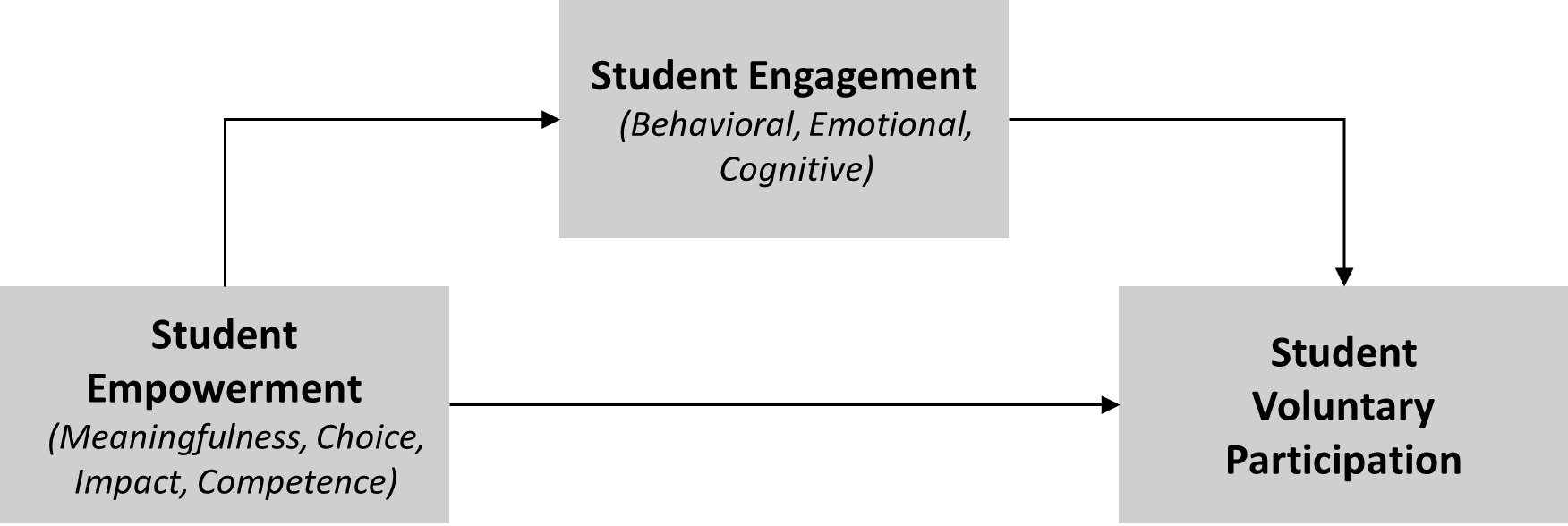
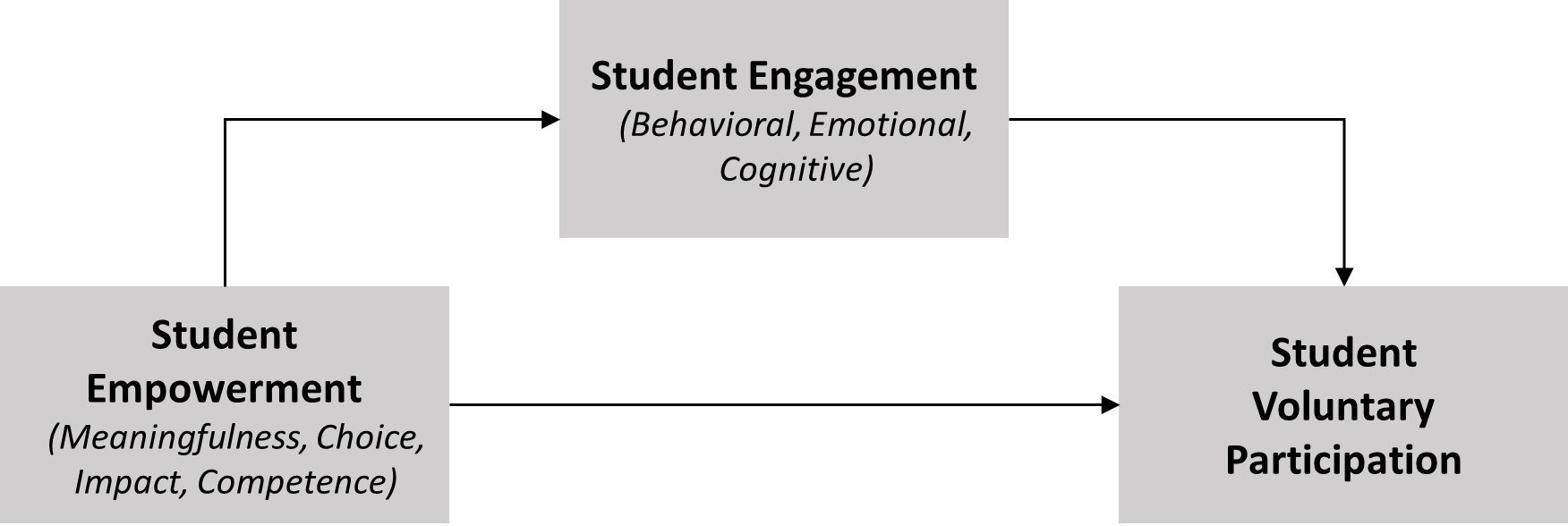
Based on this theoretical discussion, we propose four hypotheses, as shown in Figure 1:
H1. Empowerment positively influences student engagement
H2. Engagement positively influences voluntary participation
H3. Empowerment positively influences voluntary participation
H4. Engagement mediates the effect of empowerment on voluntary participation
Methodology
The research was conducted at a traditional business school in São Paulo, with about 2,000 undergraduates. The study focused exclusively on the Business Administration program, which actively promotes student-centered learning and provides a suitable environment to explore empowerment and engagement. In this program, marketing is part of the curriculum from the first semester onward, ensuring that all respondents have exposure to marketing courses.
We adopted a mixed method with a complementary design enabling parallel data collection and integrated analysis of quantitative and qualitative data (Creswell & Clark, 2011; Davis et al., 2011). Although the survey and classroom observations covered three core courses, the study remains anchored in marketing education because the research questions, model, and implications address challenges specific to marketing classrooms. Triangulation of survey, interviews, and observations enhanced credibility and validity (Miles et al., 2014; Nowell et al., 2017).
Quantitative Phase
The survey was conducted with students from three compulsory courses: marketing, finance, and statistics, all delivered face-to-face in a traditional classroom setting. Each course was offered in four different sections, totaling 12 classes of approximately 40 students each. Students present in class were invited to complete a self-reported paper questionnaire about their experiences in that course, which was administered at the end of the session. No student completed the questionnaire more than once, ensuring independence of observations. Although data were collected across three core courses, the analysis centers on the marketing context, with the others used only for contrasts.
Measurements
All primary measures in the study were based on existing scales from literature. These tools were adapted to the educational context, with a particular focus on classroom participation within business school settings. Scales were translated into Portuguese through an iterative process involving bilingual PhD students and faculty, preserving construct validity (Douglas & Craig, 2007). Service researchers helped reduce the scale items to keep the instrument concise. All responses were collected using 7-point Likert scales.
Voluntary Participation. Adapted Fassinger’s (1995) self-reported scale to capture discretionary classroom contributions, such as “I offered comments or raised questions in this class” and “I volunteered to answer questions in this class”. These items reflect behaviors that are not required for course completion but enhance the learning process.
Empowerment. Based on Spreitzer’s (1995) instrument, adapted to the academic context. Sample items include: meaningfulness (e.g., “This course was very important to me”); competence (e.g., “During the semester, I was confident about my ability to perform my activities in this course”); choice (e.g., “I had autonomy in determining how I would perform my activities for this course”); and impact (e.g., “I had an impact on how class activities happened during this course”).
Engagement. Adapted from Reeve and Tseng’s (2011) scale: behavioral (e.g., “I paid a lot of attention in class”), emotional (e.g., “Taking this course was interesting”), and cognitive (e.g., “I looked for practical examples to help me understand the concepts”). Agentic engagement was excluded because it represents actual behavior and conceptually overlaps with voluntary participation.
Control Variables. Age was included but was unlikely to affect results given the narrow range of the sample. Class time (7:00 a.m., 9:00 a.m., 1:00 p.m., and 3:00 p.m.) was controlled because it may influence students’ energy levels and engagement. Course (statistics, finance, and marketing) was also included, with the non-marketing subjects serving as contextual contrasts. All students were Business Administration majors and had completed at least one marketing course.
After excluding three invalid questionnaires, the final sample consisted of 319 students (54.3% female), distributed across statistics (34.8%), finance (30.7%), and marketing (34.5%).
Given our aim of investigating complex relationships among empowerment, engagement, and voluntary participation, and considering the presence of both reflective and formative constructs, we used Partial Least Squares Structural Equation Modeling (PLS-SEM). This method is recommended when the research involves higher-order constructs and there is no consensus in the literature regarding the measurement models (Hair et al., 2013).
We followed a two-stage approach, starting with an assessment of the measurement model to evaluate reliability and validity, followed by the evaluation of the structural model to test the hypothesized relationships. Bootstrapping with 5,000 subsamples was used to generate the significance levels (t-values and p-values) for the path coefficients. All analyses were conducted using SMARTPLS 3.2.8 software.
The quantitative phase tested the hypothesized relationships among the constructs. To strengthen these findings and deepen our interpretation of why empowerment and engagement operate as they do within marketing classrooms, we incorporated a qualitative phase that offers contextual insights not accessible through the survey. The next section summarizes these procedures.
Qualitative Phase
We conducted non-participant classroom observations and in-depth semi-structured interviews. The first author conducted 24 classroom observations (two per section) in the 12 course sections included in the quantitative phase. These were non-participatory and focused on classroom service-related dynamics such as student-professor interactions, student engagement behaviors, and evidence of empowering practices. Observing the three courses helped contextualize marketing classrooms by contrasting them with other compulsory courses. Approximately 50 pages of fieldnotes were generated.
Face-to-face, semi-structured interviews captured reflective experiences and attitudes toward participation in marketing courses, the key instructional setting guiding our investigation. We interviewed seven undergraduate students (Ana, Marcos, Laura, Sophia, Mary, Luiz, and Paulo), who were not part of the survey sample, and eight faculty members, including teachers, program directors, and the Dean (Alex, Bernardo, Arthur, Ronan, Ruy, Leo, Carlos, and Maria). Pseudonyms are used for all interviewees. All participants were affiliated with the same business school. Initial student interviewees were suggested by the faculty based on their availability and class attendance; we then employed a snowball sampling strategy to diversify perspectives (Creswell & Clark, 2011) and mitigate selection bias. Interviews lasted 40-90 minutes and produced 241 pages of transcripts. Consent was obtained from all participants.
We analyzed the data using an inductive thematic coding process, allowing patterns and categories to emerge from the data without imposing predefined codes (Miles et al., 2014). Two researchers independently coded the interview transcripts and observation notes using HyperResearch software version 3.7.3. We documented analytic decisions throughout the coding process and maintained an auditable record of how codes evolved into preliminary themes, ensuring transparency and traceability (Nowell et al., 2017). Differences in coding were discussed and resolved through consensus, strengthening analytic rigor and reducing individual interpretation, following an iterative process that enhances reliability and trustworthiness (Miles et al., 2014; Nowell et al., 2017).
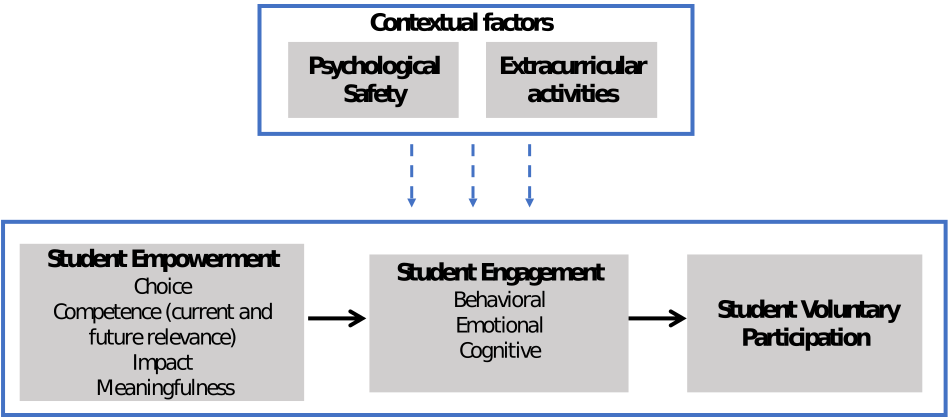
The codes were then organized into themes aligned with the study’s core constructs of empowerment, engagement, and voluntary participation, as well as emerging themes such as psychological safety and extracurricular activities. This process allowed us to integrate qualitative insights into the interpretation of survey results, adding depth and contextual understanding, thereby strengthening internal consistency (Davis et al., 2011; Palinkas et al., 2019).
Findings
This section presents the results of the quantitative analysis, followed by the integration of qualitative data analysis to deepen the interpretation.
Quantitative Analysis
We start with the assessment of the measurement model, then proceed to evaluate the structural model, in line with the PLS-SEM procedure (Hair et al., 2013).
Measurement Model Assessment
The measurement model was initially tested using exploratory factor analysis with 32 items. Five items with low factor loadings and communalities were excluded to improve the model while still ensuring that each construct retained at least three indicators.
A revised model with the remaining 27 items was estimated using PLS regression. Following Sarstedt et al. (2019), empowerment was specified as a reflective-formative second-order construct, estimated through the repeated indicators approach. Table 1 summarizes the scale validation measures. Overall, the results indicated good measurement properties.
The AVE for engagement was 0.78, and the composite reliability was 0.91, supporting both reliability and validity (Hair et al., 2013). We thus followed recommendations by Sarstedt et al. (2019) to assess potential collinearity among the lower-order components of empowerment. The estimated variance inflation factors (VIF) for meaningfulness (1.199), choice (1.462), impact (1.451), and competence (1.210) were below the conservative threshold of 3 (Hair et al., 2013), indicating no multicollinearity issues. All relationships between the higher-order component and its lower-order constructs were significant and relevant. Therefore, we concluded that the measurement model was valid.
Structural Model Results
Table 2 reports the path coefficients and significance levels used to evaluate the hypotheses in the proposed model.
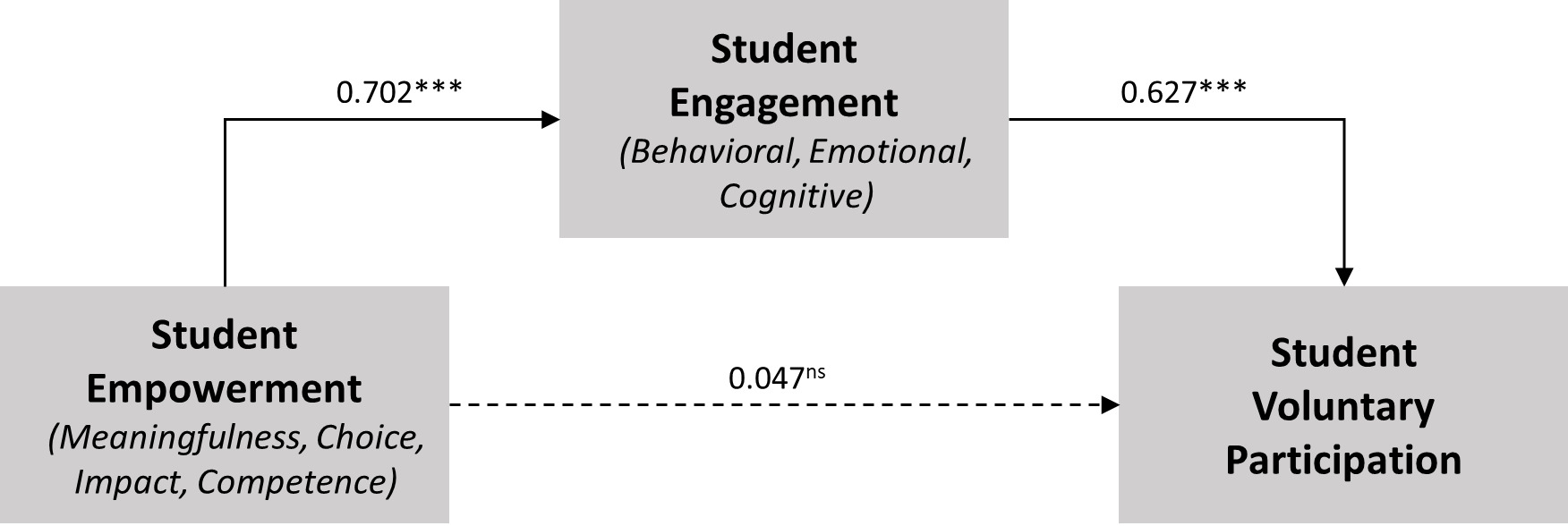
The structural model results confirmed three of the four hypotheses. Empowerment had a strong and significant effect on engagement (H1; β = 0.702, p < 0.001), and engagement significantly increased voluntary participation (H2; β = 0.627, p < 0.001). The direct effect of empowerment on voluntary participation was not significant (H3; β = 0.047, ns), while the indirect effect through engagement was significant (H4; β = 0.440, p < 0.001), indicating full mediation.
Figure 2 displays the tested model with standardized path coefficients and significance levels. The explained variances (R2) were 0.492 for engagement and 0.477 for voluntary participation, and Stone-Geisser’s Q2 values (0.463 and 0.235, respectively) indicated satisfactory predictive relevance (Hair et al., 2013).
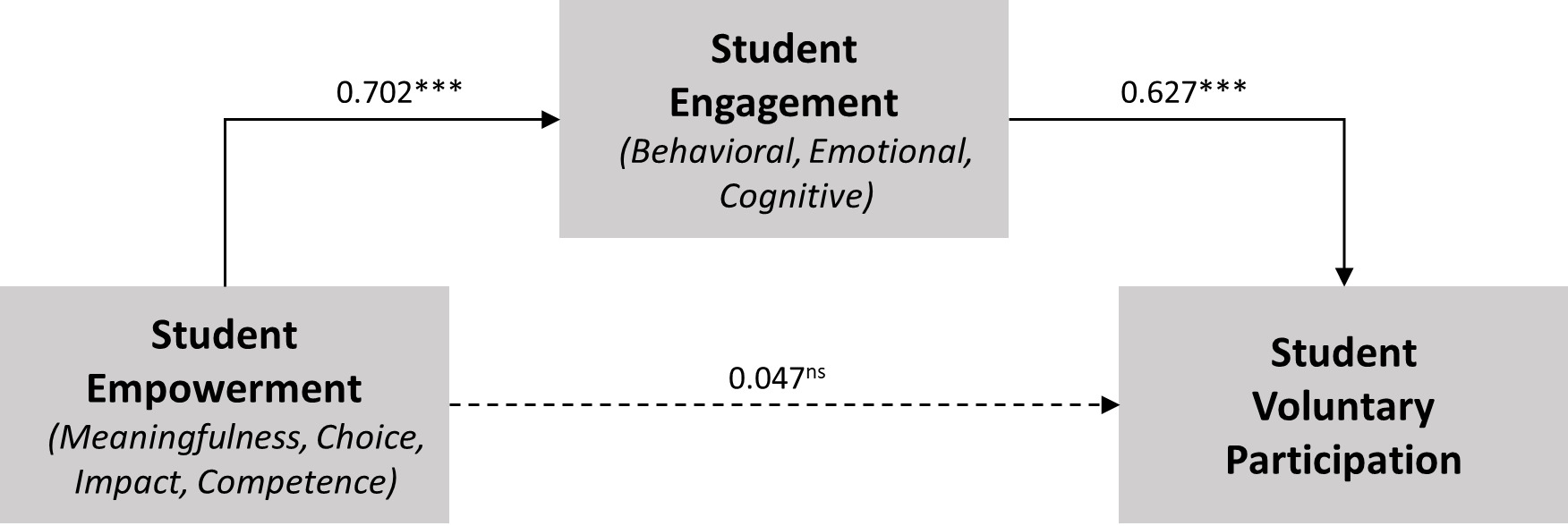
Among the control variables, course had a significant effect on voluntary participation (β = 0.152, p < 0.01), whereas age (β = 0.085, ns) and class time (β = –0.050, ns) did not show significant effects.
A multi-group analysis, presented in Table 3, further revealed that the indirect effect of empowerment on participation was stronger in marketing (β=0.572) than in finance (β=0.423) or statistics (β=0.366), with the difference between marketing and statistics reaching statistical significance (diff 0.206; p 0.042).
Qualitative Analysis
The qualitative analysis generated five inductive themes derived from the coding process, organized around empowerment, engagement, and voluntary participation (Themes 1-5), as well as two emergent themes, psychological safety and extracurricular experiences (Themes 6 and 7), that appeared consistently across interviews and observations. Using triangulated evidence, we identified how empowering initiatives activate the four psychological dimensions of empowerment specifically in marketing classes, and why this activation relates to higher engagement and voluntary participation. The qualitative data revealed additional nuances in students’ perceptions and responses to empowering strategies, further clarifying the dynamics at play in the marketing context.
Themes Linking Empowerment, Engagement, and Participation
1. When empowerment isn’t enough. One recurring pattern in the qualitative data was that empowerment, by itself, did not lead to voluntary participation. Students who felt autonomous and capable often refrained from contributing unless they were also emotionally, behaviorally, and cognitively engaged. Marcos described a lack of engagement despite feeling able to participate: “I did not like [the course]; my engagement was practically null […] I went to the classroom just to be present, and I did the minimum to get approved.” His account reflects a coded pattern in which students reported having the conditions to act but not the willingness to invest effort. Although he had autonomy and competence, his lack of engagement caused withdrawal from deep learning, limiting his participation to the minimum required for course completion. This supports the idea that voluntary participation requires more than having opportunities and feeling able to do it; it also depends on the willingness to invest effort and engage in the learning experience (Reeve & Tseng, 2011), corroborating our quantitative findings that engagement fully mediates the relationship between empowerment and voluntary participation (H4).
These insights suggest that educational tools and classroom environments designed to promote empowerment must also be structured in ways to activate students’ engagement, including their emotional involvement. To explore why this occurs, we next examine how specific pedagogical practices bring the psychological dimensions of empowerment to life, beginning with meaningfulness.
2. Meaningfulness through real-world connection. Another central theme that emerged was meaningfulness, particularly when students perceived real-world relevance in the activities. This suggests that classrooms must be designed to make learning purposeful and emotionally resonant, so students perceive value in investing effort and participating voluntarily. This echoes prior work showing that task meaningfulness energizes student involvement (Fehrer et al., 2018; Thomas & Velthouse, 1990) and aligns with evidence in marketing education that real-world projects and authentic challenges are especially effective in stimulating motivation (Garver et al., 2025).
As Mary explained, “the project clarified the concepts to practice what we had learned […] with the project, you realize you can apply the knowledge,” while Luiz added that “we really enjoyed applying the content because the project was well designed; it was a real challenge.” Together, their statements show that meaningfulness arises from practical application and can promote an emotional involvement with learning, a combination that strengthens students’ willingness to participate.
Classroom observations reinforced this pattern. In sessions where instructors used everyday analogies or culturally relevant examples, such as music, sports, or consumer behavior, students were visibly more attentive, engaged, and willing to contribute. As professor Santos explained: “I start to talk about a music band or soccer team because this [discussion] leads them to engage and participate… and afterwards I present the theory behind it.”
Our evidence indicates that initiatives promoting meaningfulness are highly influential, yet they do not guarantee sustained engagement on their own; their impact is amplified when combined with other dimensions of empowerment, such as choice, impact, and competence.
3. Choice in the learning process. Autonomy emerged in the coding process as another key driver of engagement. Students reported greater engagement, and consequently, greater voluntary participation, when they could influence aspects of how they learned. Ana contrasted elective versus required courses: “In the courses I chose to enroll in because they interested me, I was motivated to dedicate more […] I looked for the knowledge I needed; I contributed to the course.” Observations confirmed that structured flexibility, such as allowing students to select topics, formats, or group roles, was associated with more spontaneous participation. As Julia noted: “You get more engaged in learning when you choose how you are going to learn [a subject].”
These insights align with self-determination theory (Ryan & Deci, 2000), showing that perceived choice fosters intrinsic motivation. Importantly, as Peterson (2001) argues, students may not always be able to choose whether to participate, but they can exercise agency in how they participate, for example, by documenting their learning processes, selecting tasks, or shaping contributions inside and outside the classroom. Especially in compulsory courses, giving students this kind of voice strengthens engagement and paves the way for more voluntary forms of participation.
4. Impact through contribution. The analysis also revealed students’ desire to feel that their contributions mattered in the learning environment. In observed classes, voluntary participation increased when instructors created opportunities for debate, asked open-ended questions, and encouraged peer-to-peer discussion, fostering a sense of co-constructed knowledge, rather than one-way delivery.
Sophia also described how such experiences boosted her confidence: “I thought I wouldn’t survive the first semester, but then I had incredible experiences, like even winning the Marketing Award (in the Marketing competition). I thought it was so cool, it really motivated me.” Mary echoed this link between recognition and motivation: “One course I really enjoyed was marketing […]. It was practical, and it had a prize involved […] the project really made the concepts we had learned clearer. We had to apply them, present the outcome, and be recognized for it.”
As Garver et al. (2025) note, classroom competitions are perceived as highly engaging, though they may backfire if poorly implemented. Our findings suggest that competitions strengthen students’ sense of impact when they combine recognition (e.g., awards and prizes), meaningfulness (authentic and challenging projects), and voice (opportunities to share ideas) within psychologically safe and co-constructed environments, conditions further explored in the following sections.
5. Competence and its dimensions. A recurring pattern in the material involved competence expressed both as immediate confidence and as the effort required to develop future skills. Sophia emphasized how clarity and instructional scaffolding supported her engagement and active participation: “She highlighted the most important topics on the board and explained them to us […]. It was a class in which I could understand everything.”
Observational data confirmed this connection: when instructors used visual aids, reinforced key points, and revisited instructions, students were more likely to take initiative, ask questions, and remain engaged. Conversely, dense or abstract instruction often led to withdrawal or minimal contribution.
Beyond this immediate sense of confidence, some students also expressed competence as a developmental aspiration, a goal to be pursued even in less enjoyable or less intuitive subjects. Luiz articulated this forward-looking mindset: “Even in the subjects I do not like, I have to be competent in this; I have to be trained in this to be able to pursue my career.”
These accounts suggest that competence operates at two levels: present level of competence, and future competence development. This dual perspective adds nuance to competence as a pathway linking empowerment and engagement, particularly in marketing courses where students may underestimate the competences developed by the discipline (Aggarwal et al., 2007; Lamont & Friedman, 1997). It also aligns with Bandura’s (2006) theory of self-efficacy, which emphasizes belief in one’s ability to learn and improve as a driver of engagement and persistence. For instructors, this indicates the importance of not only creating conditions for students to follow the course but also making explicit the competencies being developed.
6. Psychological safety setting the stage for engagement. Psychological safety appeared as a strong emergent theme shaping whether empowerment translated into engagement. As previously noted, Marcos described a course in which he felt able to participate yet disengaged and did only the minimum to pass. Reflecting on why, he contrasted this experience with another course where he engaged and voluntarily participated because “You have the space to make mistakes [and learn from them].” Ana noted: *“*It was a safe space… a safe environment for you to get engaged.” Julia echoed: “We have a safe space […] everybody participates.” Across interviews and observations, students emphasized that a supportive and nonjudgmental environment encouraged them to speak up and take risks.
Students also highlighted the importance of the physical layout. As Marcos observed:
We have a [physical] environment that leads us to do things differently […] it is very different from sitting in chairs in a classroom where the teacher is standing up front, where there is a verticality: ‘I am the authority, the teacher.’ Here, we have a horizontal space […] we sit in a circle […].
Observations confirmed these contrasts. In some sessions, where students sat in groups and instructors fostered open dialogue, participation flowed more spontaneously, and discussions extended naturally. In other cases, with a traditional classroom layout (rows of desks), the professor speaking from the front with a microphone, interactions were more restrained, and students often remained quiet even when empowering conditions were present. These findings indicate that psychological safety depends not only on interpersonal dynamics but also on the physical arrangements that can either reinforce hierarchy or invite collaboration (Clarke et al., 2020). It provides the contextual condition under which empowerment more readily translates into engagement and voluntary participation; without it, empowerment may remain latent rather than expressed in action.
7. Spillover effect of positive extracurricular experiences. The analysis also identified a spillover theme, in which extracurricular experiences influenced students’ classroom engagement. Beyond classroom dynamics, several students shared how extracurricular activities, such as student organizations or sports teams, positively influenced their motivation and connection with academic learning. These experiences acted as anchors sustaining broader academic involvement. Laura, for example, shared how her experience in a Junior Enterprise reshaped her perception of school: “During the first semester, I was unmotivated with school […] now I am enjoying […] I’m working at the Junior Consultancy Cia [entity managed by students] […] I’m working with real companies […] and I’m enjoying school now.”
Similarly, Ana recalled how participating in the handball team helped her remain engaged during a challenging semester:
If I had not been involved with the handball team, I would have left the school […] The second semester was tough; it [handball] motivated me to stay […] I was the captain [of the team]; and I was super engaged with everyone [in the team] […], and I told myself, ‘I will not leave [school]’.
These accounts reinforce that engagement extends beyond specific classroom experiences; it is part of a broader motivational system. As noted by Taylor et al. (2011), engagement is shaped not only by teaching techniques but also by how students connect to their overall educational journey.
For educators and program designers, this underscores the value of incorporating experiential opportunities, such as internships, junior enterprises, student associations, or interdisciplinary experiential learning, as opportunities for cultivating transferable engagement. These extracurricular experiences can reinforce students’ sense of empowerment and sustained engagement, creating conditions that may support persistence and voluntary participation throughout their academic journey.
Marketing Context as a Boundary Condition
Across all seven themes, a consistent pattern emerged: the empowerment–engagement–participation pathway was most salient in marketing courses, particularly because marketing is a compulsory subject often perceived as less rigorous or demanding than finance or statistics (Lamont & Friedman, 1997; Taylor et al., 2011). Students repeatedly described marketing as “easier” or based on “common sense,” as illustrated by Luiz: “people [students] do not like that course because it is super easy”, and Paulo: “Finance is the only one that forces you to study and give you a background […] I think that marketing is common sense. It’s nothing you can’t learn by yourself.”
These perceptions help explain why the psychological mechanisms identified in Themes 1 to 7 become especially important in marketing education. Lower initial motivation amplifies the role of meaningfulness, autonomy, impact and competence, as students need stronger motivational cues to move from basic compliance to voluntary participation. This interpretation aligns with the multi-group patterns, which suggested a weaker indirect effect in statistics-possibly related to students’ lower perceived competence in a more technical subject-and an intermediate effect in finance, where perceived difficulty may coexist with a sense of practical relevance.
In this sense, psychological safety and positive spillover from extracurricular experiences seem particularly influential in marketing classrooms. Because students often approach the discipline with skepticism, safe relational climates and broader identity-shaping experiences outside class help activate engagement that may not arise solely from the instructional method.
These marketing-course findings reinforce that compulsory marketing courses present unique motivational challenges, making empowerment and engagement especially critical for fostering voluntary participation. Themes 6 and 7 - psychological safety and extracurricular spillover - add a contextual layer that helps explain why these conditions become particularly salient in marketing. In this context, instructors cannot assume inherent interest in marketing; instead, they must intentionally cultivate environments that activate these psychological processes and support students’ movement from basic compliance toward voluntary participation.
Discussion and Practical Implications
This study examines how empowerment and engagement interact to foster voluntary participation in higher education marketing courses. While previous research has addressed these constructs separately, our findings clarify their sequential relationship: empowerment drives engagement, which in turn enables voluntary participation. The quantitative phase and classroom observations across three courses showed that the overall structure holds across subjects, but it becomes most pronounced in marketing. Finance and statistics served only as comparative contexts to highlight how the underlying process becomes particularly salient in marketing. Additionally, the qualitative interviews allow us to deepen the examination of how and why this process operates, revealing nuances that emerge most clearly within marketing classrooms.
By distinguishing between empowerment as a multidimensional psychological state and engagement as a disposition to act, this study addresses conceptual ambiguity in the literature (Brodie et al., 2011; Fehrer et al., 2018). We also contribute methodologically by operationalizing voluntary participation as distinct from mandatory behavior, and by adapting measurement instruments for an educational context (Dong & Sivakumar, 2017). Our evidence adds nuance to how competence operates within empowerment. Beyond immediate ability, students engage when they understand that the course develops competences with clear future relevance, an aspect that students frequently undervalue in marketing courses (Álvarez-Huerta et al., 2021; Lamont & Friedman, 1997).
In business education, marketing is sometimes perceived as less rigorous than other courses (Aggarwal et al., 2007; Lamont & Friedman, 1997), which can reduce motivation. Our findings show that this perception can be countered through intentional course design. Prior evidence indicates that experiential methods such as competitions, client-based projects, and flipped classrooms are particularly effective in fostering student engagement (Bacon & Stewart, 2021; Garver et al., 2025). While McGrath (2023) highlights that students value experiential learning for its contribution to personal development and social responsibility, our study contributes to this perspective by illustrating psychological processes that may help explain why such practices succeed: they activate empowerment and engagement, particularly when supported by psychologically safe and inclusive environments. In our data, psychological safety appeared to play an important role in promoting and sustaining engagement. A respectful and inclusive environment encourages risk-taking and openness, allowing empowerment and engagement to translate into participation. This was evident in marketing, where voice and creativity are central. Safety is reinforced by trust-based relationships, clear norms for interaction, and classroom layouts that reduce perceived hierarchy.
For marketing educators, voluntary participation must be intentionally cultivated. It grows from purposeful design with projects tied to aspirations, choices that give students voice, recognition that amplifies impact, and learning environments that make contribution feel safe and socially supported.
AI use in marketing education can reinforce empowerment conditions. When embedded in experiential activities, AI tools may strengthen perceptions of competence, autonomy, and task relevance by supporting exploration (Richter et al., 2024), but AI remains a tool rather than a substitute for disciplinary knowledge; without conceptual grounding and intentional instructional design, iterative prompt refinement alone does not foster critical thinking. Even when AI is pedagogically well integrated, its capacity to deepen reasoning depends on students’ cognitive and emotional engagement. Without a disposition to invest effort and reflect on AI outputs, students are unlikely to interrogate prompts, question assumptions, or develop critical judgment, and AI may instead foster superficial involvement (Larson et al., 2024; Mehmet et al., 2025). Consistent with our findings, these conditions translate into voluntary participation only when students are genuinely engaged, making engagement the critical mechanism through which empowerment, whether pedagogical or AI-supported, leads to voluntary contributions beyond minimum requirements.
Additionally, faming competence as both immediate confidence and future-relevant skills further boosts engagement, with extracurricular spillover reinforcing motivation. These elements, when aligned, motivate voluntary contributions beyond minimums, as integrated in Figure 3.
Limitations and Future Research
Despite its contributions, this study has limitations. The sample was drawn from a single business school in Brazil, which may limit generalizability. Focusing on compulsory marketing courses strengthens internal coherence but reduces applicability to electives or other disciplines. Interviews were conducted with participants recommended by faculty and other students through a snowball sampling process, which may introduce selection bias. Survey data were self-reported, raising the risk of social desirability bias, and the cross-sectional design limits causal inference regarding the empowerment-engagement-participation pathway. These limitations were partially mitigated through triangulation across methods and data sources.
Moreover, our findings open several promising avenues for future research that could significantly advance theoretical understanding and practical applications. First, psychological safety emerged as a critical but underexplored contextual condition in the relationship between empowerment and engagement. Future studies could examine it more systematically, for example by developing specific measures or by exploring experimental designs that manipulate factors such as peer judgment, instructor approachability, physical layout, discussion formats, or error-handling approaches to test whether these dynamics influence the empowerment-engagement pathway.
Second, the spillover effects of extracurricular experiences represent a finding that warrants systematic investigation. Longitudinal research could track how participation in student organizations, competitions, or internships shapes classroom engagement over time, and under which conditions empowerment developed in one domain transfers to others.
Third, our qualitative evidence revealed that future competence development also seems to shape why students engage. Future studies could investigate whether students’ perceptions of developing relevant future competence operate as an independent driver of engagement, especially in courses that students initially perceive as less challenging, such as marketing.
Finally, the differential strength of the empowerment-engagement pathway across subjects (stronger in marketing than in statistics or finance) as identified in the multi-group analysis, reinforces that this pattern is most pronounced in the disciplinary context that motivated this study. Future research could examine how similar dynamics operate in other business subjects and assess whether these patterns hold across different educational systems and cultural contexts.
Future research could empirically investigate how emerging educational technologies, such as generative AI, interact with the empowerment-engagement-participation pathway, examining boundary conditions under which AI strengthens competence and autonomy perceptions versus when it may weaken cognitive engagement and critical thinking.