
INTRODUCTION
Global demographic transitions have become one of the defining challenges of the twenty-first century. According to the United Nations (2023), the global population aged 65 and above is expected to double by 2050, reshaping healthcare systems, economies, and social structures. This demographic shift intensifies the demand for sustainable health services, age-friendly innovations, and inclusive business models that enhance both individual well-being and societal resilience (Cohen, 2001). Beyond being a social and economic issue, this transformation also presents a pedagogical challenge for marketing education: how to design learning environments that can meaningfully engage students with complex, real-world problems. While these trends are often framed as public-health or demographic concerns, they also highlight the need for instructional approaches that prepare learners to analyze and respond to such challenges in applied and market-oriented ways, rather than relying solely on content-based instruction. In particular, marketing programs are increasingly expected to prepare learners to design responsible and sustainability-oriented solutions that contribute to broader societal goals, including the United Nations Sustainable Development Goals (SDGs), particularly SDG 3 (Good Health and Well-being) and SDG 4 (Quality Education) (Cano et al., 2022).
Thailand mirrors this transformation with particular urgency. The National Statistical Office (2024) reports that the country has already entered an “aged society” and will become “super-aged” by 2031, with more than 28 percent of its population aged over 60. This creates both societal challenges and emerging opportunities for health-related enterprises. To remain competitive and socially responsible, businesses must integrate sustainability imperatives—environmental stewardship, social equity, and ethical governance—into innovation processes (Phungviwatnikul & Voraprateep, 2024). For marketing education, these conditions provide a rich and authentic context through which students can be challenged to engage with real market complexity, rather than abstract or hypothetical cases.
Younger generations, particularly Generation Z learners in Thai higher education (born 1995–2012), are positioned to drive such transformation. Digitally native and socially conscious, they are adept at technology use and value inclusivity (Bhalla et al., 2021; Hameed & Mathur, 2020). However, despite these strengths, studies indicate that Gen Z learners in Thai higher education often lack the applied entrepreneurial and strategic marketing competencies required to translate social awareness into viable health-business innovation (Malele, 2020). This limitation is not solely a matter of student capability, but is closely linked to instructional designs that emphasize passive learning and theoretical coverage over active engagement and application.
This situation highlights a broader pedagogical gap in marketing education. Traditional curricula still emphasize conceptual knowledge, content coverage, and case memorization, offering limited opportunities for students to develop analytical, creative, and ethical decision-making skills. As a result, even socially relevant topics such as sustainability or health innovation may fail to engage learners when delivered through conventional lecture-centered approaches. To prepare learners for rapidly evolving markets, higher-education institutions must adopt pedagogical approaches that emphasize inquiry, collaboration, ethical reasoning, and authentic problem-solving. Active Learning, grounded in constructivist, experiential, and transformative learning theories, positions students as co-creators of knowledge through exploration, experimentation, and reflection (Felder & Brent, 2009; Kolb, 2014).
Importantly, the value of Active Learning lies not in isolated activities, but in its systematic integration across the learning process. Recent scholarship further demonstrates that experiential and action-oriented pedagogies can cultivate entrepreneurial mindsets aligned with sustainability and social impact (Nzembayie et al., 2024). This highlights the need for empirically validated pedagogical models that operationalize Active Learning in a coherent and transferable manner within marketing education.
To address this pedagogical need, the present research develops and validates an Active Learning–based pedagogical model as its central contribution. Sustainability and health-business innovation are intentionally employed as authentic learning contexts through which the pedagogical model is implemented and evaluated, rather than as independent theoretical foci. Using a sequential mixed-methods research and development (R&D) design, the study operationalizes Active Learning through a four-stage learning process that combines foundational instruction, digital self-learning, experiential project work, and expert evaluation for Generation Z learners in Thai higher education. By embedding Active Learning consistently across these stages, the model aims to enhance student engagement, sustained attention, and applied competence development in contemporary marketing classrooms.
Research Objectives
Building upon the demographic and pedagogical challenges discussed above, this study aims to develop and validate an Active Learning–based pedagogical model for marketing education. Sustainability and health business innovation serve as applied learning contexts through which the model’s effectiveness is examined. Using a sequential mixed-methods research and development (R&D) design, the study systematically constructs, implements, and evaluates the model to enhance Generation Z learners’ competencies. The specific objectives are:
-
To design and validate an Active Learning–based pedagogical model for marketing education.
-
To examine the model’s effects on analytical, creative, and entrepreneurial competencies among Generation Z learners in Thai higher education, including the development of sustainability-driven health business concepts.
-
To evaluate learners’ satisfaction and perceived outcomes to determine the model’s overall pedagogical value.
Collectively, these objectives seek to advance marketing education by demonstrating how a systematically designed Active Learning model can enhance engagement and applied competence development through authentic, real-world contexts.
LITERATURE REVIEW
Active Learning in Marketing Education
Active Learning has become a foundational approach in higher education, particularly in disciplines such as marketing that require creativity, decision-making, and problem-solving (Sewagegn & Diale, 2019). Rooted in constructivist and experiential learning theories, Active Learning positions students as co-creators of knowledge through inquiry, experimentation, and reflection (Dawson et al., 2014). Recent post-pandemic scholarship emphasizes that these approaches, particularly in hybrid and blended formats, are essential for modernizing marketing education and are especially relevant to the learning preferences of Generation Z learners in Thai higher education (Mishra & Dholakia, 2023; Wittayakom et al., 2024). By emphasizing engagement rather than passive reception, Active Learning encourages students to analyze information, integrate diverse perspectives, and apply theory to real-world marketing contexts.
In marketing education, empirical studies consistently demonstrate that Active Learning enhances academic achievement, motivation, and critical thinking (Kusumoto, 2018; Peters, 2011). Activities such as simulations, problem-based projects, and collaborative analysis foster transferable skills essential for marketing professionals—including adaptability, analytical reasoning, teamwork, and communication (Barell, 2010). Importantly, these skills align with global trends toward student agency, lifelong learning, and the development of practice-oriented marketing competencies (Tashkeyeva et al., 2020).
Despite these benefits, many Asian higher-education systems remain constrained by hierarchical traditions and exam-oriented structures, which often suppress creative risk-taking and limit opportunities for self-directed learning (Pham Thi Hong, 2011; Tran, 2013; Wong, 2004). Thus, adapting Active Learning to local educational cultures requires careful instructional design that balances academic rigor with autonomy, collaboration, and reflective engagement. Contextualized pedagogical models are therefore essential to ensure meaningful learner engagement and cross-cultural applicability in marketing curricula.
Sustainable Business and Health Innovation
Sustainability has become a central driver of business strategy, shaping how organizations respond to social expectations, environmental pressures, and long-term market shifts (Hacking & Guthrie, 2008). In the health sector, sustainability emphasizes improving human well-being while minimizing negative environmental and social impacts. This focus has accelerated innovations such as digital wellness systems, preventive-care solutions, recyclable healthcare packaging, and resource-efficient production models (Ertz & Patrick, 2020; Hussain et al., 2024; Vergunst et al., 2020; Xames & Topcu, 2025).
For countries like Thailand, where demographic aging and healthcare demands continue to intensify, sustainable health innovation presents opportunities for both economic growth and societal resilience (Kortana, 2018). These developments highlight the need for future marketers to understand how sustainability shapes consumer expectations, value propositions, and business models.
Within marketing education, sustainability enriches students’ understanding of ethical branding, consumer well-being, and socially responsible decision-making. Prior research shows that embedding sustainability within marketing curricula enhances students’ ability to interpret market problems holistically and develop strategies that balance commercial goals with societal needs (Agu et al., 2022; Borin & Metcalf, 2010; Bridges & Wilhelm, 2008).
More importantly, sustainability functions as a pedagogical foundation, not only as course content. When students engage with sustainability through applied and experiential activities, they develop reflective judgement, ethical awareness, and the ability to design solutions for diverse and vulnerable populations. These learning outcomes align directly with the aspirations of SDG 3 (Good Health and Well-being) and SDG 4 (Quality Education), positioning marketing education as a pathway to responsible and future-oriented business innovation.
Entrepreneurial and Marketing Competencies among Generation Z
Generation Z learners in Thai higher education (born 1995–2012) represents a digitally fluent and socially aware cohort whose learning preferences are reshaping higher education. Research characterizes Gen Z learners as technology-driven and values-oriented, and these characteristics are also highly relevant to Generation Z learners in Thai higher education (Alruthaya et al., 2021; Hendrastomo & Januarti, 2023). Although they demonstrate creativity and digital proficiency, several studies indicate that they often lack the strategic, analytical, and entrepreneurial competencies required for complex business problem-solving (Ismail et al., 2023; Magano et al., 2020).
This competency gap reinforces the need for pedagogical strategies that move beyond rote learning and emphasize applied, experiential understanding. Gen Z learners respond positively to learning experiences that integrate technology with collaboration, authenticity, and purpose. When engaged in project-based or experiential tasks, they demonstrate increased motivation and self-efficacy (Wittayakom et al., 2024). However, these activities must be supported with structure and reflective guidance to ensure that learners develop sound judgment and socially responsible decision-making skills.
Developing entrepreneurial capacity among Gen Z learners in Thai higher education therefore requires curricula that blend analytical rigor with creativity, ethical reflection, and sustainability awareness. Within marketing education, such competencies are essential for transforming students’ concern for social and environmental issues into viable business solutions for aging and health-conscious consumer groups. Strengthening these competencies allows Gen Z learners not only to adapt to emerging market conditions but also to lead sustainable innovations that contribute to broader societal progress.
Pedagogical Frameworks Integrating Sustainability into Marketing Education
Embedding sustainability in marketing education requires more than the addition of isolated lessons or case analyses. It calls for a pedagogical approach that integrates knowledge, experience, and reflection in ways that encourage students to consider the broader social implications of marketing decisions. Frameworks such as Experiential Learning (Kolb, 2014), Project-Based Learning (Thomas, 2000), and Reflective Learning (Moon, 2013) offer conceptual foundations for this shift by emphasizing iterative cycles of action, interpretation, and application that connect academic concepts to real societal challenges.
Recent research in business and marketing education demonstrates that sustainability-oriented pedagogies enhance student engagement, ethical awareness, and the ability to evaluate market problems from multiple viewpoints. Service-learning projects addressing community health needs and social entrepreneurship challenges related to aging populations have been shown to strengthen learners’ analytical and moral reasoning (Wymer & Rundle-Thiele, 2017). Through these experiences, students move beyond theoretical understanding to cultivate empathy, accountability, and socially responsible marketing practice.
However, the effectiveness of sustainability integration depends on cultural and institutional contexts. In many Asian educational environments, hierarchical classroom norms and examination-oriented assessment systems can limit student participation and experimentation (Kember, 2016). Therefore, designing an Active Learning–based model that incorporates sustainability requires attention to student diversity, cultural expectations, and institutional readiness to ensure meaningful engagement.
This study builds on these insights by proposing a pedagogical model that integrates Active Learning with sustainability and health business innovation in marketing education. The model is designed to strengthen analytical, creative, and ethical competencies aligned with Sustainable Development Goals—particularly SDG 3 (Good Health and Well-being) and SDG 4 (Quality Education). Through empirical validation, the study aims to demonstrate how sustainability-oriented Active Learning can shift marketing education from traditional knowledge transmission toward more transformative, socially responsive learning.
To clarify the connection between learning theories and instructional activities, Table 1 presents the alignment between the theoretical foundations of the model and the corresponding learning activities implemented in the four-stage learning process.
Conceptual Framework of the Study
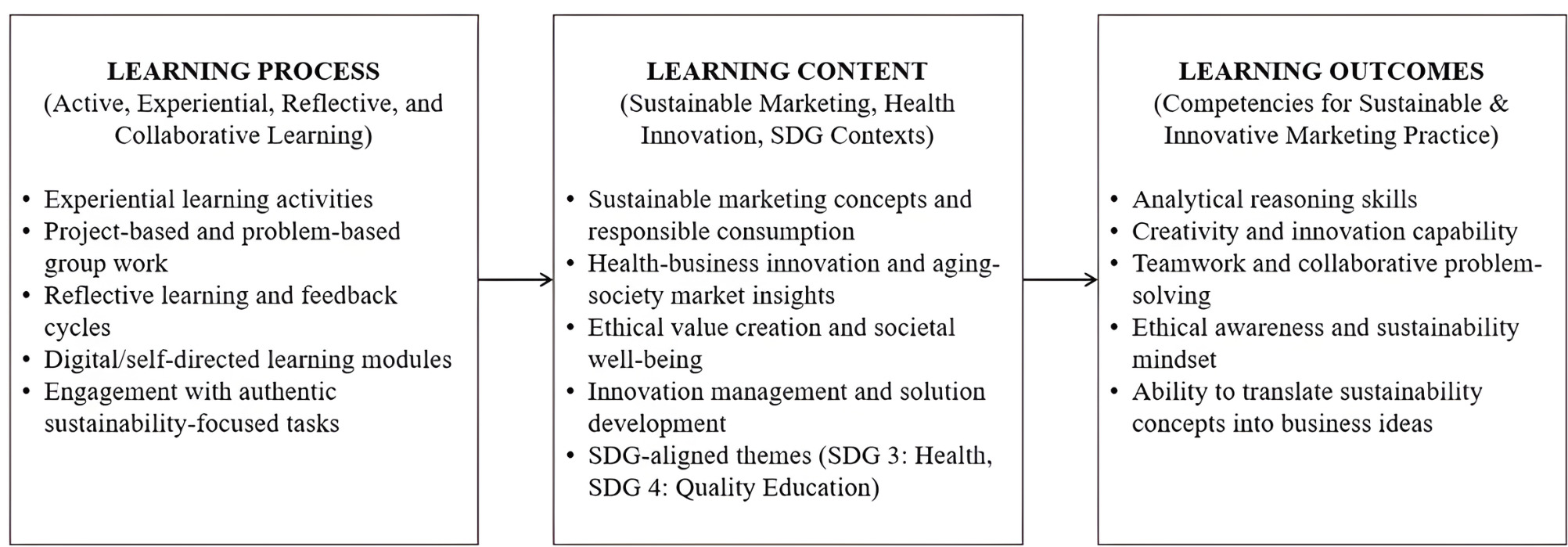
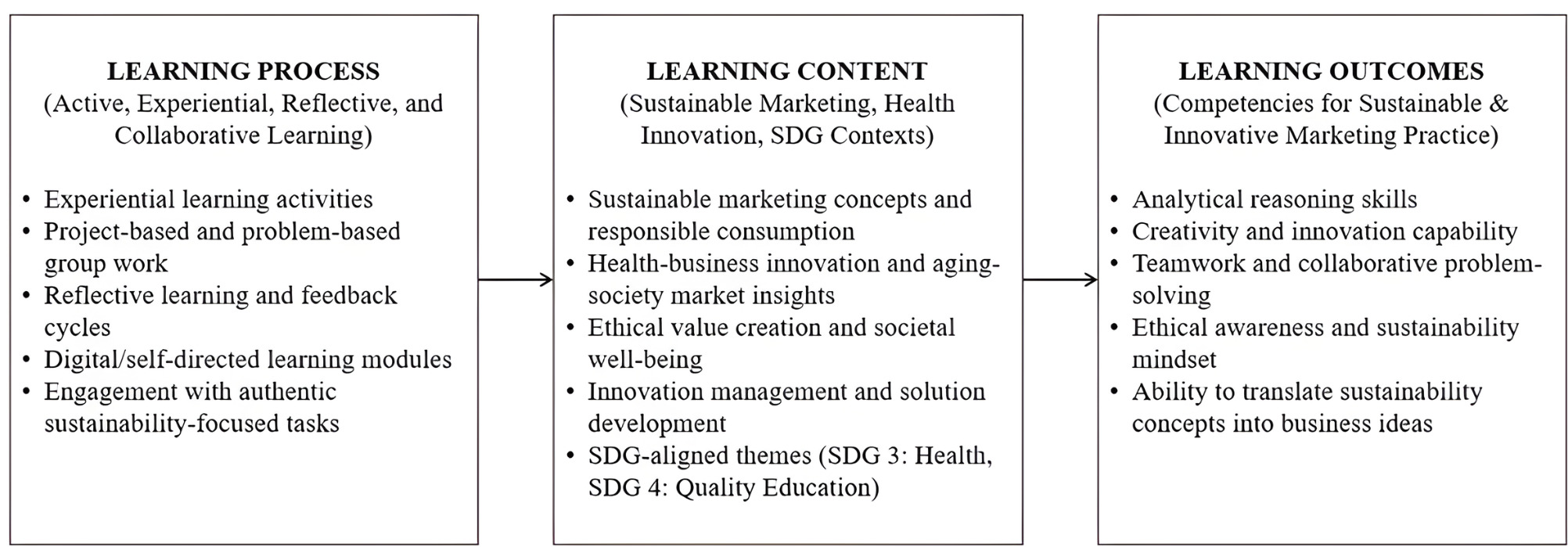
The conceptual framework positions Active Learning as the central pedagogical mechanism linking marketing education with sustainable health-business innovation. The framework comprises three interrelated dimensions—learning process, learning content, and learning outcomes—organized through the principle of constructive alignment (Biggs, 1996). These dimensions were selected to reflect how learners engage with sustainability-driven marketing tasks: the learning process provides the experiential structure, the learning content provides the thematic focus, and the learning outcomes represent the competencies to be developed.
The learning process emphasizes experiential, project-based, and reflective activities that require students to collaborate, investigate problems, and apply concepts in authentic contexts. This process reflects constructivist and experiential learning theories, which view active engagement as essential for transforming students’ understanding and enabling deeper learning.
The learning content integrates sustainable marketing concepts, health entrepreneurship perspectives, and innovation management principles relevant to societal and demographic changes. This content anchors the framework in SDG priorities, particularly SDG 3 (Health and Well-being) and SDG 4 (Quality Education), ensuring that learners address problems with both commercial and societal implications.
The learning outcomes focus on analytical reasoning, creativity, teamwork, and ethical awareness—competencies identified as essential for future marketers operating in sustainability-oriented and aging-related markets. These outcomes function as evidence of learning transformation, demonstrating how students internalize, apply, and extend sustainability-driven marketing principles.
Overall, the framework illustrates a coherent progression in which Active Learning (process) enables students to engage meaningfully with sustainability-oriented marketing content (content), leading to the development of higher-order marketing competencies (outcomes). Through this alignment, Active Learning functions as a transformative pedagogical model that prepares learners to design responsible and feasible innovations for an aging and sustainability-driven world. The conceptual framework illustrating these relationships is presented in Figure 1.
METHODOLOGY
Research Design
This study employed a research and development (R&D) design using a sequential mixed-methods approach to develop, implement, and validate an Active Learning–based pedagogical model for integrating sustainability and health business innovation into marketing education. The primary focus of the study was the development and validation of the pedagogical model itself, with sustainability and health-business innovation serving as authentic learning contexts rather than independent theoretical contributions. The research was positioned as an educational innovation initiative in higher-education settings, aiming to produce a transferable pedagogical framework rather than a single-course teaching intervention.
The R&D process comprised four iterative phases consistent with the ADDIE and R&D traditions: exploration, design and development, implementation and evaluation, and refinement. In the exploration phase, pedagogical challenges related to student engagement and sustained attention, as well as learner needs and contextual gaps in marketing education, were identified through (1) insights derived from a previously conducted systematic literature review on Active Learning approaches in online training environments (Wittayakom et al., 2024), and (2) curriculum and course document analysis across marketing and business programs. In addition, one-on-one expert consultations were conducted with academic and industry specialists to contextualize instructional challenges and practical constraints. In the design and development phase, theoretical insights from Active Learning, sustainability education, and marketing pedagogy were synthesized to construct the model’s components. This synthesis was conducted through thematic integration of literature-derived principles and expert feedback to ensure pedagogical coherence, learner engagement, and practical applicability. Subject-matter experts reviewed the model for theoretical coherence, learning alignment, and curricular relevance. Rather than repeating the full systematic review procedure, the present study builds upon the findings of that prior review to guide the design and validation of the pedagogical framework.
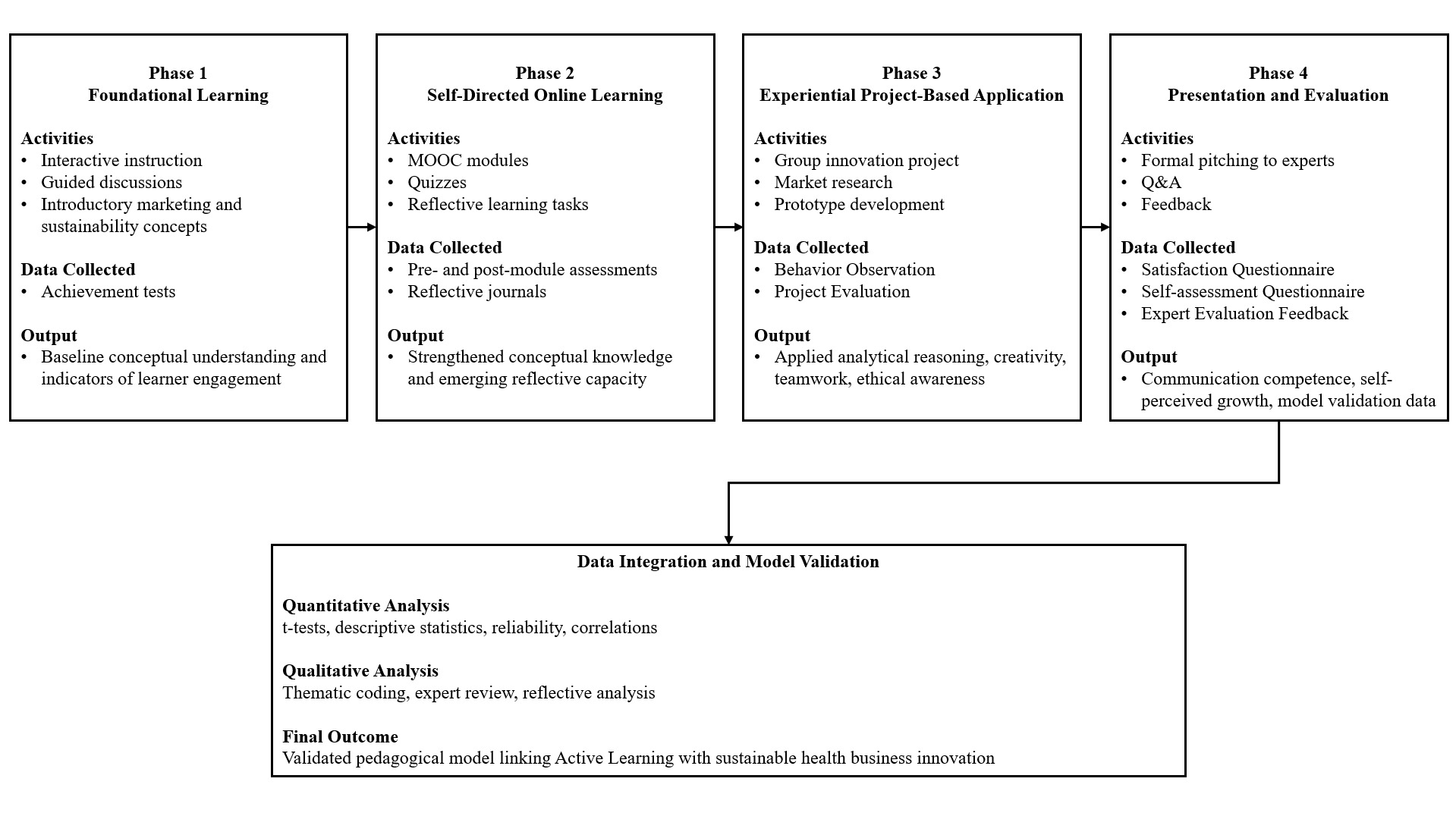
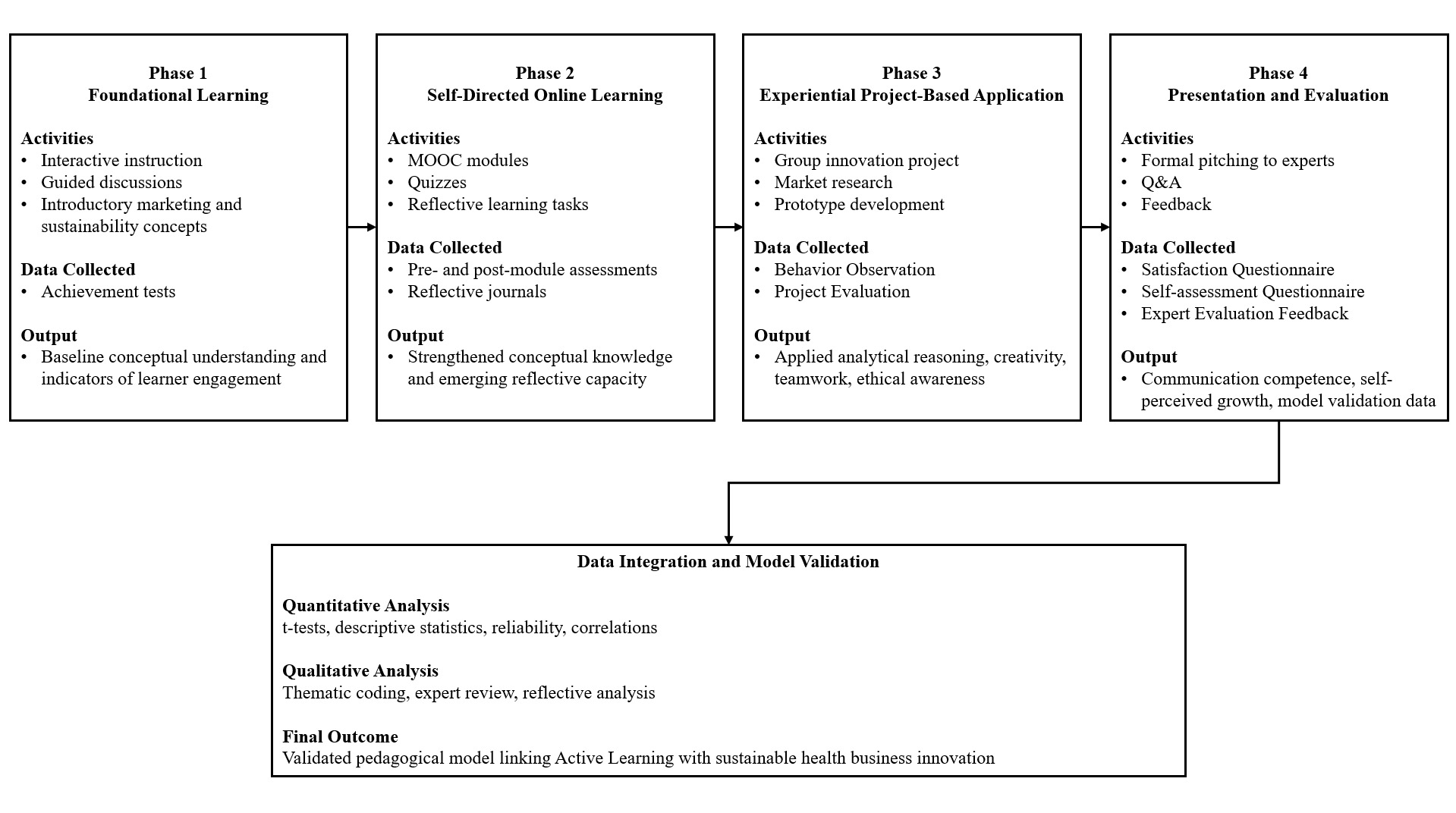
The implementation and evaluation phase formed the core of the R&D process and involved a structured four-stage learning sequence completed by all 215 participants. Stage 1 consisted of one month of in-class foundational learning where students acquired essential marketing and sustainability knowledge through lectures, facilitated discussions, inquiry-based activities, and case analysis, with the instructor serving as facilitator. Stage 2 involved a one-week digital learning module delivered via a MOOC platform, in which students completed three self-directed units on health-science foundations, health-business trends, and sustainable business concepts. These modules incorporated formative quizzes, structured reflection prompts, and application-based tasks designed to promote active cognitive engagement and self-regulated learning. Stage 3 required students to work in teams to conduct a one-month project that analyzed aging-society challenges and developed sustainable product or service concepts using principles of marketing strategy and product development. Stage 4 concluded with expert evaluation, where teams presented their solutions to business practitioners, entrepreneurs, and faculty members as part of an authentic assessment process emphasizing feedback, reflection, and iterative improvement to assess feasibility, innovation, and marketing relevance.
Throughout the four stages, data were collected using mixed-methods instruments including achievement tests, online assessments, project evaluations, behavioral observations, reflective tasks, and satisfaction surveys. These data enabled assessment of cognitive gains, learning behaviors, and perceived value of the pedagogical experience.
Finally, in the refinement phase, statistical findings, qualitative insights, and expert recommendations were integrated to enhance model clarity, pedagogical robustness, and scalability across marketing-related programs. Expert feedback obtained during individual consultations and project evaluations was explicitly used to refine learning activities, assessment criteria, and instructional sequencing. This iterative approach ensured that the final model was not only theoretically grounded but also empirically validated in an authentic instructional context emphasizing sustainability and innovation.
Expert Profile and Consultation Method
The expert consultation involved five purposively selected individuals representing both academic and industry perspectives. Two experts were marketing academics holding doctoral degrees, each with more than five years of teaching experience and holding academic ranks of Assistant Professor or higher. An additional academic expert specialized in education and curriculum development, also holding a doctoral degree with comparable teaching experience and academic rank. The remaining two experts were industry practitioners, consisting of one health-business entrepreneur and one marketing professional working in a medical device company, providing practical insights into market feasibility and industry relevance.
Expert consultations were conducted through individual one-on-one semi-structured discussions, rather than group-based sessions, to allow in-depth exploration of pedagogical structure, learning activities, and assessment alignment. The consultations focused on (1) the coherence of the Active Learning design across learning stages, (2) the suitability of sustainability- and health-based tasks for sustaining student engagement, and (3) the alignment between learning activities, competencies, and assessment criteria. Notes from each consultation were documented and synthesized thematically, and the resulting insights were incorporated during the design, development, and refinement phases of the pedagogical model.
Participants and Sampling
The participants were Generation Z learners in Thai higher education enrolled in marketing-related programs in higher-education institutions in Thailand. This cohort was selected because Gen Z represents the emerging workforce expected to influence sustainability-oriented business innovation. A final sample of 215 students was obtained in accordance with Yamane’s (1967) sample size calculation at a 95% confidence level and a 5% margin of error. All 215 participants engaged in all four structured learning stages and completed the corresponding pre- and post-assessments used for model validation.
A multi-stage sampling procedure was employed to ensure rigor and diversity. First, purposive sampling identified 463 potential participants who expressed interest in entrepreneurship, sustainability, or health business development. Second, stratified random sampling was applied across program levels (introductory, intermediate, and advanced courses) and learning modes (on-site and blended) to ensure representation of different academic backgrounds. The final sample of 215 was then selected based on Yamane’s (1967) formula and availability for full participation across all stages of the study. All participants volunteered to join after receiving detailed information regarding the research objectives, confidentiality measures, and procedures. Written informed consent was obtained prior to data collection.
Research Instruments
A combination of quantitative and qualitative instruments was used to assess cognitive learning outcomes, behavioral engagement, and affective perceptions toward the pedagogical model. All instruments were developed based on the conceptual framework and aligned with the three core competency domains—analytical, creative, and ethical competencies. Content validation was conducted by three subject-matter experts, producing Item–Objective Congruence (IOC) values above 0.70, confirming appropriateness for the sustainable marketing and health innovation context.
-
Achievement Tests – parallel pre- and post-tests measured students’ knowledge of sustainable marketing, health-business innovation, and their ability to apply key concepts. Items were constructed using competency-based indicators and validated by experts (IOC = 0.72–0.95). Reliability exceeded 0.80, and KR-20 confirmed internal consistency for both foundational (Stage 1) and final assessments.
-
Behavioral Observation Form – a structured observation protocol captured engagement, collaboration, problem-solving behaviors, and communication during in-class and project-based activities. Two trained raters independently evaluated participants across four dimensions, achieving inter-rater reliability above 0.70 using percentage agreement and Cohen’s kappa.
-
Project Evaluation Rubric – the rubric assessed group project outputs on creativity, alignment with aging-society needs, sustainable value creation, and market feasibility. The rubric was reviewed by industry practitioners and faculty experts for clarity and relevance, yielding inter-rater reliability above 0.75 during pilot scoring.
-
Satisfaction and Self-Assessment Questionnaires – these instruments measured perceived learning improvement, instructional quality, activity relevance, and satisfaction with the Active Learning process. Expert review confirmed IOC values above 0.70, and reliability testing produced Cronbach’s alpha coefficients ranging from 0.83 to 0.94.
Collectively, the instruments provided comprehensive data on cognitive performance, behavioral participation, project quality, and reflective learning, enabling multidimensional evaluation of the pedagogical model’s impact.
Data Collection Procedures
Data were collected across one academic semester during the implementation phase of the R&D process, following four structured learning stages that systematically operationalized Active Learning across cognitive, reflective, collaborative, and evaluative dimensions, with sustainability principles integrated throughout the learning process. Each stage generated distinct cognitive, behavioral, or affective data aligned with the model’s competency framework.
-
Foundational Learning (1 month) – participants engaged in interactive workshops introducing sustainability, marketing ethics, demographic transitions, and aging-society market dynamics. Learning activities included guided discussions, case-based analysis, and instructor-facilitated inquiry designed to encourage questioning, interpretation, and peer interaction, rather than passive content reception. Data collected included behavioral observation checklists and pre-/post-tests measuring foundational marketing and sustainability knowledge.
-
Self-Directed Online Learning (1 week) – students completed three structured MOOC modules covering sustainable marketing principles, health entrepreneurship, and emerging health-market trends. Each module incorporated formative quizzes used as learning checks, structured reflection prompts, and application-based questions requiring learners to interpret cases, justify decisions, and connect concepts to marketing practice, thereby supporting active cognitive engagement and self-regulated learning. Quantitative data (module scores, pre-/post-quizzes) and qualitative reflections were collected automatically through the digital platform.
-
Experiential Project-Based Application (1 month) – working in small groups, participants designed sustainable health-business concepts addressing aging-society challenges. Teams conducted market analysis, opportunity assessment, and product/service conceptualization using marketing frameworks. Throughout this stage, behavioral observations documented collaboration, communication, and problem-solving, while iterative formative feedback sessions supported reflection, revision, and deeper engagement, producing qualitative data on learning progress.
-
Presentation and Evaluation (End-of-course evaluation) – final projects were presented to panels of marketing instructors, health-business entrepreneurs, and industry specialists, constituting an authentic assessment activity that emphasized dialogue, feedback, and reflective learning rather than summative judgment alone. Experts evaluated feasibility, innovation, and sustainability alignment using the standardized rubric. Participants subsequently completed satisfaction and self-assessment surveys capturing perceived learning gains, engagement, and instructional quality.
Across all stages, sustainability principles were embedded in the design of case materials, online modules, project themes, and evaluation criteria to ensure consistent integration throughout the learning process. Active Learning principles—student engagement, collaboration, reflection, and application—were intentionally embedded across all stages rather than confined to a single project activity. All procedures complied with ethical guidelines for higher-education research, including voluntary participation, confidentiality, and anonymized data coding. The resulting multi-source dataset—spanning cognitive tests, behavioral observations, project evaluations, and self-reported perceptions—provided a comprehensive empirical basis for validating the pedagogical model.
Data Analysis
Both quantitative and qualitative analyses were used to evaluate the model’s effectiveness. Descriptive statistics summarized demographic data, test scores, and satisfaction levels, while paired-sample t-tests measured learning improvement between pre- and post-assessments. One-sample t-tests compared achievement scores against predetermined benchmarks. Reliability and inter-rater consistency were examined through Cronbach’s alpha and intraclass correlation coefficients (ICC). Correlation analysis explored relationships among engagement, performance, and satisfaction indicators.
Qualitative data from reflective journals, online discussions, and expert reviews were analyzed through thematic coding, focusing on creativity, collaboration, and sustainability awareness. Two independent coders reviewed and cross-validated the themes, resolving discrepancies through consensus. Triangulation across quantitative and qualitative sources enhanced interpretive validity, ensuring that findings reflected both performance outcomes and deeper learning processes.
This integrated analytical design enabled comprehensive evaluation of the model’s cognitive, behavioral, and attitudinal impact, confirming its role as a validated pedagogical innovation for sustainability-driven marketing education.
To clarify the relationship between the research phases, data collection instruments, analytical methods, and corresponding research objectives, a structured summary is presented in Table 2.
The overall research phases and data flow of the study are illustrated in Figure 2.
RESULTS
Phase 1: Foundational Learning
Quantitative analyses of the post-learning assessment revealed a mean score of 16.27 (SD = 3.00, n = 215) on a 30-point scale, significantly exceeding the 15-point benchmark representing minimum competency, t(214) = 6.18, p < .001 , Cohen’s d = 0.42 , as shown in Table 3. These results suggest that participants demonstrated satisfactory conceptual understanding of sustainable marketing and health business innovation. The moderate mean, however, suggests that higher-order analytical and integrative skills required further experiential engagement in later phases.
Qualitative observations from facilitators’ field notes indicated active attention and responsiveness during discussions but limited initiative to apply theoretical ideas independently. Reflections showed that while foundational concepts were understood, interaction remained surface-level, indicating the need for deeper participatory engagement in subsequent active learning phases.
Phase 2: Self-Directed Online Learning (MOOC)
Quantitative comparisons of pre-tests and post-tests across three online modules demonstrated significant improvements in learning outcomes (p < .001) , as summarized in Table 4. Mean scores increased from 9.21 to 9.90 (Cohen’s d = 0.54), 6.77 to 9.36 (Cohen’s d = 1.40), and 8.71 to 9.80 (Cohen’s d = 0.74) for Modules 1–3 respectively. The final achievement test (M = 54.74, SD = 3.87) significantly surpassed the benchmark of 42 points, t(214) = 48.21, p < .001 , Cohen’s d = 3.29, suggesting high mastery levels after completing the digital modules.
Qualitative reflections revealed strong satisfaction with content clarity, flexibility, and real-world relevance. Participants valued the autonomy of self-paced study and the opportunity to revisit materials, which fostered reflective learning and accountability. Some noted challenges in maintaining motivation without live feedback, suggesting a need for stronger interactive support in future iterations. Overall, the digital-learning phase was associated with improvements in conceptual understanding while encouraging self-regulated and reflective learning habits. Reflections also revealed increased awareness of ethical and sustainability considerations in health-related markets.
Phase 3: Experiential Project-Based Application
Quantitative results from 36 group projects revealed high performance in both research and innovation dimensions, as summarized in Table 5. Research and Analysis averaged 4.73 (SD = 1.00) and Innovation Design 4.45 (SD = 1.05) on a five-point scale, corresponding to 9.46 and 8.90 of 10 respectively. These scores suggest that the model supported participants’ ability to apply marketing and sustainability principles to the development of viable, socially responsible business innovations.
Qualitative analysis identified recurring themes of collaboration, creativity, and sustainability integration. Participants engaged in constructive teamwork and peer feedback while translating consumer insights into innovative health-related solutions. Outputs ranged from plant-based supplements and refillable personal-care products to assistive technologies and telehealth concepts. These projects demonstrated cross-disciplinary thinking, ethical awareness, and environmental sensitivity, underscoring the success of experiential learning in fostering applied entrepreneurial competence. Several projects demonstrated explicit ethical reasoning, such as considerations of accessibility, inclusivity, and environmental responsibility.
Phase 4: Presentation and Evaluation
As summarized in Table 6, quantitative findings from expert-panel assessments indicated a mean presentation score of 8.19 (SD = 2.44, n = 36 teams) on a 10-point scale, indicating strong communication and persuasive capacity with some variation in delivery quality. Learners’ satisfaction (M = 4.45, SD = 0.48) and perceived competency gains (M = 4.34, SD = 0.49) were both high, and correlations between presentation performance and satisfaction (r = .61, p < .01) as well as self-assessment (r = .57, p < .01) were significant, suggesting that affective engagement may be associated with performance.
Expert reviewers praised the integration of marketing, sustainability, and healthcare perspectives, highlighting coherence and professional delivery. Recommendations focused on strengthening persuasive storytelling and data-driven justification. Participant reflections echoed these insights, describing the experience as transformative in building confidence, adaptability, and communication skills aligned with professional expectations.
Integrated Discussion of Results
Synthesizing across all four phases, findings suggest that the Active Learning–based pedagogical model enhanced analytical reasoning, creativity, teamwork, and ethical awareness among Generation Z learners in Thai higher education. Quantitative results showed significant gains in both conceptual and applied competencies, while qualitative insights revealed how collaboration, reflection, and authentic problem-solving reinforced those gains. Across phases, qualitative data showed recurring expressions of ethical and sustainability awareness, particularly in how students justified decisions related to aging populations and health-related markets.
The integration of digital self-directed learning, experiential project work, and expert-level presentation created a cohesive learning ecosystem that bridged theoretical marketing knowledge with real-world sustainability challenges. The validated model thus demonstrated positive pedagogical outcomes for marketing education in higher-education contexts by supporting the development of sustainability-oriented entrepreneurial mindsets suited to the emerging health and aging economy.
DISCUSSION
Interpretation of Quantitative and Qualitative Results
Findings from all four phases indicate that the Active Learning–based pedagogical model supported the development of competencies in sustainable health business innovation among Generation Z learners in Thai higher education. These outcomes could be attributed to the systematic integration of Active Learning across all four instructional stages, including inquiry-based classroom activities, reflective self-directed online learning, collaborative project work, and feedback-driven expert evaluation, as operationalized in the R&D process. Quantitative results showed meaningful gains in conceptual understanding, analytical reasoning, and innovation design. For example, the high average score in Research and Analysis (4.73 out of 5) reflects stronger analytical reasoning, while the Innovation Design score (4.45 out of 5) and qualitative themes such as sustainability integration suggest growth in creative and ethical competencies. The combination of self-directed online learning, experiential project development, and expert evaluation appears to have encouraged both analytical thinking and sustainability awareness, which are areas that conventional lecture-focused teaching tends to address less effectively. Although the online component was delivered through a MOOC format, the learning design emphasized formative assessment, reflection, and application-based tasks rather than passive content consumption, which helped sustain engagement and support conceptual transfer.
This study contributes to the Active Learning literature in three key ways. First, it extends existing research by integrating sustainability-oriented marketing education with health business innovation, illustrating how real-world societal challenges can be embedded within experiential marketing curricula. Second, the study demonstrates how online reflective learning and project-based experiential learning can be systematically integrated within a structured four-phase pedagogical model. Third, the findings provide empirical evidence from the Thai higher-education context, thereby extending Active Learning research that has largely been developed and tested within Western educational systems.
Learning progression across the four phases demonstrates the cumulative nature of the model. Initial activities built foundational understanding, whereas later stages encouraged application, iteration, and refinement of ideas in authentic contexts. This pattern aligns with Kolb’s experiential learning cycle, particularly the transition from reflective observation to active experimentation. The inclusion of reflective activities, collaborative projects, and structured expert feedback further supported deep learning, consistent with transformative learning principles highlighted by Mezirow. These elements were intentionally embedded at different stages of the learning sequence rather than concentrated in a single project phase, reinforcing continuous engagement throughout the course.
The significant associations between satisfaction, self-assessment, and presentation performance indicate that affective engagement contributed to learning outcomes. Students who perceived higher relevance, autonomy, and confidence tended to perform better in communicating and defending their innovation concepts. This interaction between cognitive and emotional engagement highlights the need for learning environments that are both intellectually challenging and supportive of motivation and psychological safety.
Pedagogical Implications of the Active Learning Model
Several implications emerge for marketing educators who aim to integrate sustainability and innovation into higher education. The present findings reinforce Active Learning as a suitable pedagogical approach for developing interdisciplinary and higher order competencies. When students are positioned as active contributors rather than passive recipients, they are more capable of analyzing complex problems, generating innovative ideas, and working collaboratively. In the present model, this positioning was operationalized through facilitated inquiry in foundational sessions, reflective self-directed learning, collaborative project-based problem solving, and iterative expert feedback, demonstrating how Active Learning can be implemented as a coherent pedagogical system rather than isolated activities. These results are consistent with the argument of Bonwell and Eison that Active Learning promotes deeper reasoning and longer retention.
The model was also adapted to the Thai higher-education context, where traditional lecture-based instruction and relatively hierarchical classroom dynamics remain common in many learning environments. To address these conditions, Active Learning activities such as guided discussions, collaborative group projects, and reflective exercises were intentionally structured to gradually encourage student participation and peer interaction. This gradual transition from instructor-centered instruction to participatory learning helped students build confidence in expressing ideas, engaging in dialogue, and collaborating with peers.
The study also highlights the value of combining digital learning with experiential project work. Online modules supported autonomy and conceptual mastery, while project-based activities and expert evaluation connected theoretical ideas with practical innovation tasks. Importantly, the sequencing of online learning prior to project work ensured that students entered collaborative tasks with shared conceptual grounding, supporting more meaningful application and discussion during later stages. This structure aligns with competency-based approaches increasingly emphasized in marketing education and fits well with the learning preferences of Generation Z students, who value flexibility and real-world relevance.
Sustainability education appears to require more than theoretical coverage. Effective learning environments must connect environmental, social, and ethical principles to real decision-making processes. Through market analysis, innovation design, and expert presentation, students were able to move from understanding sustainability as an abstract idea to applying it as a professional responsibility. This process supported the development of entrepreneurial capability alongside ethical sensitivity.
Comparison with Previous Studies in Marketing Education
The results are consistent with previous work on experiential learning and sustainability focused instruction in business and marketing education. Studies by Freeman and Prince have shown that Active Learning enhances engagement and academic outcomes. The present study extends these findings into the context of sustainability and health-oriented business innovation. Rundle Thiele and Wymer have emphasized that experiential learning supports ethical reasoning. The current findings support this position and demonstrate how sustainability focused projects and expert evaluation can reinforce ethical awareness.
Unlike earlier research that examines isolated teaching techniques, this study integrates digital learning, collaboration, reflection, and expert review within a single pedagogical structure. This alignment was explicitly designed and evaluated through the R&D process, ensuring consistency between learning objectives, instructional activities, and assessment methods across all stages. This design corresponds to Biggs’s concept of constructive alignment, which emphasizes coherence between learning objectives, instructional methods, and assessment. As such, the study contributes to the literature by showing how pedagogical alignment, rather than content alone, shapes the depth and quality of learning outcomes.
The findings also address calls for marketing curricula that align with the expectations of Generation Z learners in Thai higher education. This learner group places importance on autonomy, digital engagement, and social relevance. The model tested in this study incorporates all three elements and provides empirical evidence that these features can lead to improved analytical, creative, and ethical competencies.
Implications for Teaching Sustainable and Health-Oriented Business Courses
The implications extend beyond classroom instruction to curriculum design and institutional policy. Institutions that aim to embed sustainability within business programs may adopt this model as a flexible framework. The modular structure allows implementation within marketing, entrepreneurship, healthcare management, and related fields while maintaining alignment with Active Learning principles. Integrating online modules, collaborative project work, and expert evaluation helps students move from theoretical awareness to applied problem-solving.
At an institutional level, the model supports a transition from teaching-centered to learner-centered education, aligning with the United Nations Sustainable Development Goals related to quality education and inclusive economic growth. The model also provides evidence of competency development that can support accreditation processes such as AACSB and AUN-QA through measurable improvements in analytical reasoning, creativity, communication, and ethical awareness.
Finally, the results suggest that sustainable and health-oriented business education should cultivate interdisciplinary literacy that connects marketing, innovation, sustainability, and healthcare systems. The findings suggest that the effectiveness of sustainability- and health-oriented business education depends less on topical content alone and more on the pedagogical design through which such content is experienced by learners. Active Learning has the potential to serve as a foundation for preparing graduates who can navigate the opportunities and challenges of an aging and sustainability driven economy while demonstrating social responsibility and forward-looking thinking.
CONCLUSIONS AND IMPLICATIONS
Summary of Key Findings
This study developed and validated an Active Learning–based pedagogical model designed to enhance the competencies of Generation Z learners in Thai higher education in sustainable health business innovation. The four learning phases, which consisted of foundational orientation, online self-directed learning, project-based application, and expert evaluation, produced converging evidence of learning improvement. Quantitative findings indicated meaningful gains in cognitive achievement, project quality, and communication performance. Qualitative analyses further showed that students became more reflective, collaborative, and socially aware as they engaged in iterative learning activities. Taken together, the results suggest that experiential and sustainability-oriented pedagogies demonstrated positive outcomes in linking theoretical marketing knowledge with practical entrepreneurial innovation, thereby creating learning experiences that extend beyond traditional instruction. Importantly, sustainability and health-business innovation functioned as applied learning contexts rather than parallel theoretical contributions, allowing the study to focus primarily on the design and validation of an Active Learning–based pedagogical model.
Practical Implications for Marketing Educators
The findings offer several implications for marketing educators seeking to build engaging and transformative learning environments. Active Learning strategies should be intentionally embedded within marketing curricula to encourage inquiry, teamwork, and reflective practice. The integration of research tasks, innovation design, and structured presentation activities enables learners to develop analytical and creative abilities simultaneously. Real-world projects that focus on sustainability and health-related business challenges help students apply marketing concepts to authentic contexts and support the development of ethical and socially responsible decision-making.
The study also highlights the importance of continuous formative feedback from instructors, peers, and external experts. Such feedback reinforces motivation and deepens conceptual understanding, demonstrating the value of multidimensional assessment that captures cognitive, behavioral, and affective dimensions of learning. In addition, digital learning components can complement classroom engagement by offering flexible opportunities for learners to explore new concepts independently while maintaining guided structure and reflection.
Policy and Curriculum Development Implications
At the curriculum and policy levels, the findings present a replicable framework for integrating sustainability and health innovation themes into marketing programs. This direction aligns with the United Nations Sustainable Development Goals, particularly Goal 3 on good health and well-being and Goal 4 on quality education. Higher-education institutions can strengthen their curricula by emphasizing experiential learning, ethical reasoning, and community relevance. Aligning course objectives with sustainability priorities prepares graduates who can contribute effectively to both business competitiveness and social welfare.
Collaboration between universities, government agencies, and industry stakeholders is also essential to maintain the relevance of marketing education. Partnerships with healthcare organizations, sustainability networks, and business incubators can provide authentic environments in which students can test and refine their ideas. Such partnerships ensure that marketing programs remain dynamically connected to current global challenges and emerging workforce needs while reinforcing the broader social responsibility of business education.
Limitations of the Study and Directions for Future Research
Despite achieving its objectives, the study has several limitations that should be considered. The research was conducted within a specific higher-education setting in Thailand, which may limit the transferability of the findings to different cultural or institutional environments. Future studies should replicate and adjust the model across varied educational systems to examine its broader applicability. Although data were triangulated through multiple sources, the inclusion of self-reported measures introduces the possibility of response bias. Longitudinal research that tracks learners’ professional behavior, entrepreneurial activities, or sustainability practices after graduation would help determine long-term impact.
Future research may also explore the integration of advanced technologies into the model. Tools such as artificial intelligence assisted feedback, immersive simulations, and real-time learning analytics could enhance engagement and provide more precise assessment. Expanding interdisciplinary collaboration among marketing, healthcare, and sustainability fields would further deepen understanding of how education can support social innovation and the development of sustainable entrepreneurial practices.
CONFLICT OF INTEREST
The authors declare no conflict of interest.